


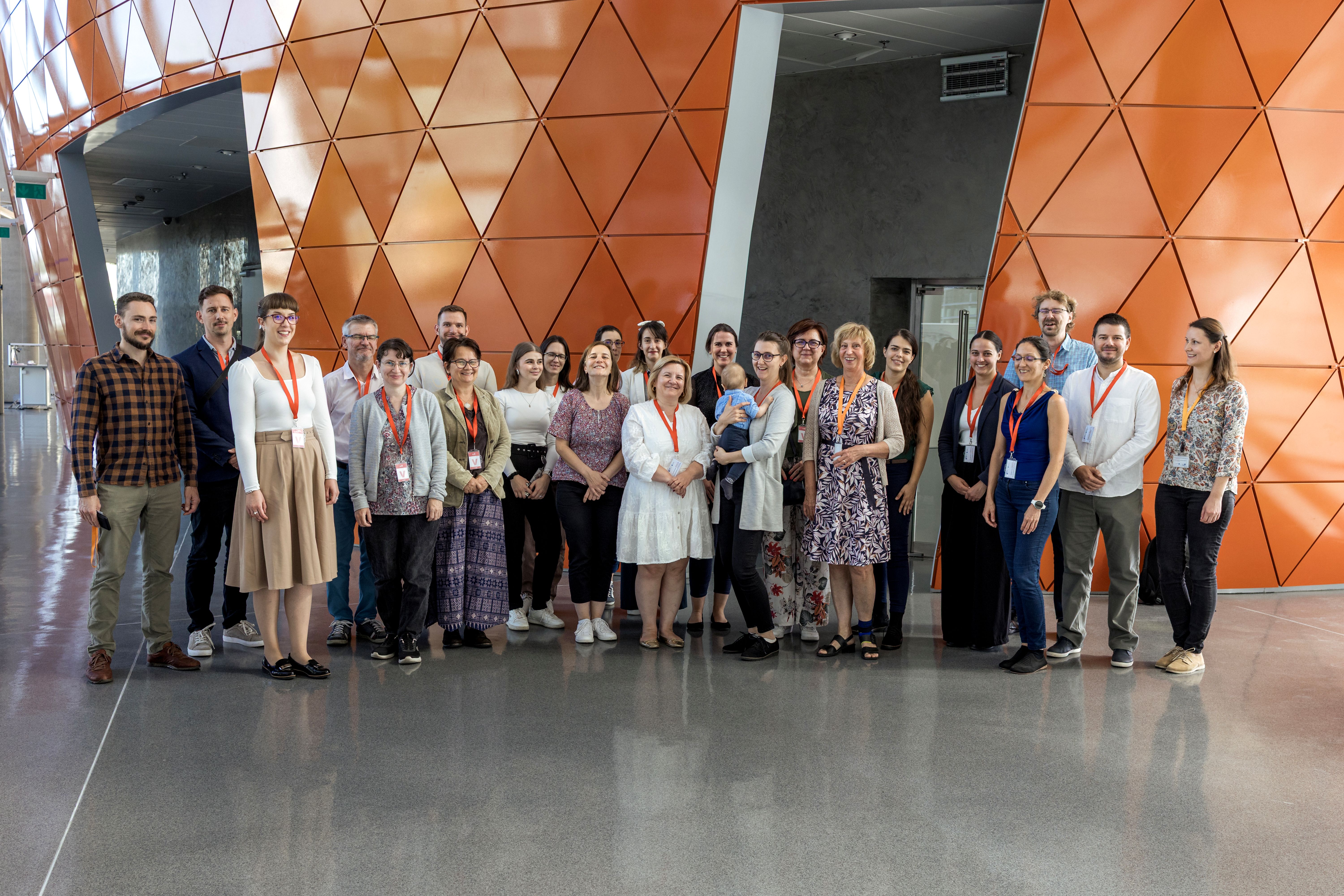
The idea for the meeting came from Professor Katalin Hideghéty, head of the Biomedical Applications Group at ELI ALPS. The initiative stemmed from a simple realization: whilst radiobiology research is being conducted at several institutions in Hungary using a variety of approaches, researchers had not previously had a forum where they could all come together in one place to present their work, the methods they use, and the opportunities available for collaboration.
“The aim of the meeting was to bring together Hungarian groups working in radiobiology and its various subfields,” said Katalin Hideghéty.
Getting to know one another – and finding common ground
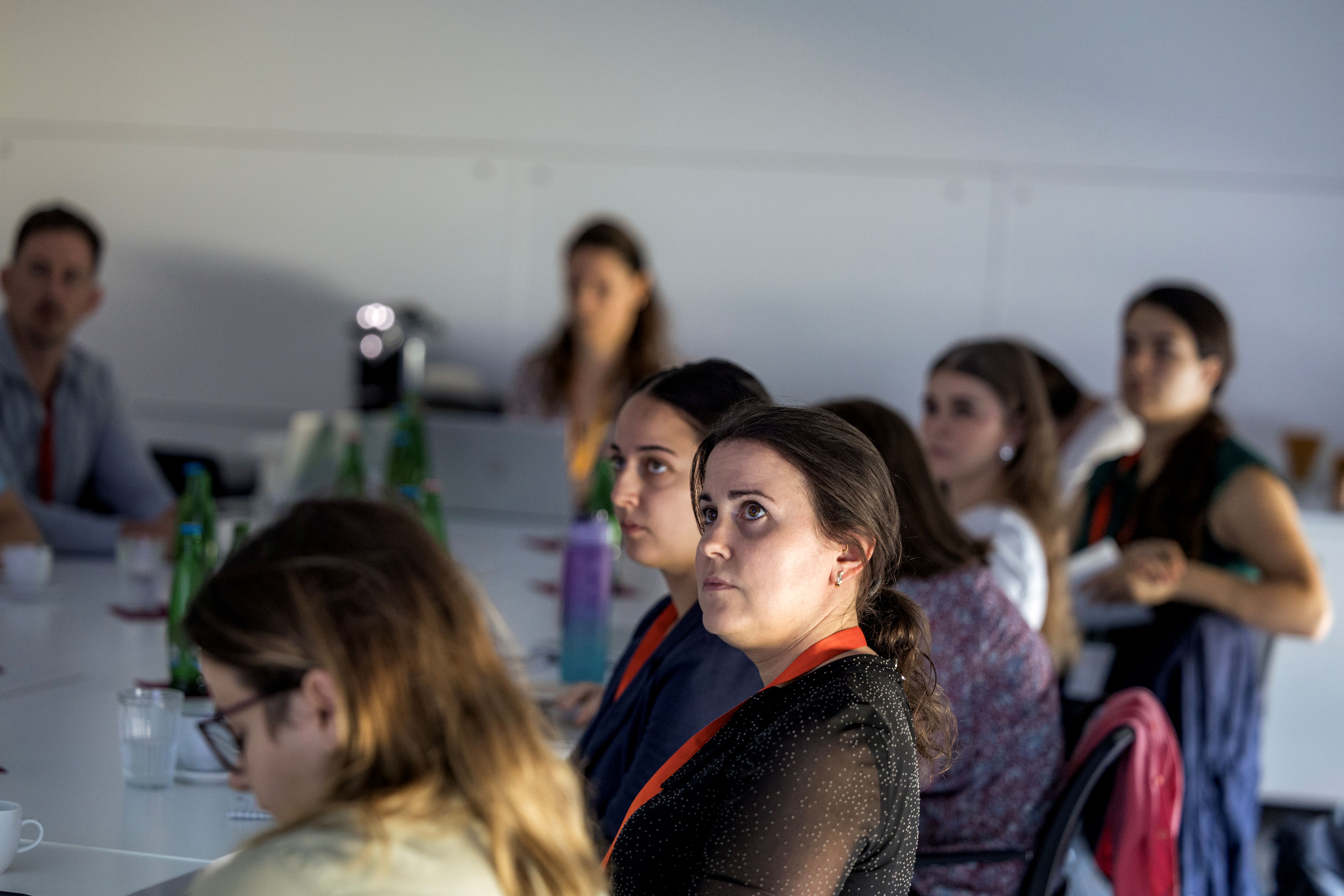
During the programme, alongside our research institute, the National Institute of Oncology, the National Centre for Public Health and Pharmacy (NNGYK), the HUN-REN Szeged Biological Research Centre (SZBK), the Institute of Biology at the University of Szeged (SZTE), and the Metabolic and Screening Laboratory at the Albert Szent-Györgyi Clinical Centre of SZTE presented their research. It became clear from the presentations that the specialists working at the various institutions possess a wide range of methods, expertise and infrastructure that can efficiently complement one another.
Researchers at the National Institute of Oncology, for example, are investigating the biological changes that occur following radiotherapy, including DNA damage, repair mechanisms and changes to the immune system. A colleague from NNGYK presented methods applicable to the biological quantification of radiation exposure, which may also be relevant to future research at our institute. The work of SZBK and the Institute of Biology at SZTE also converges with our radiation biology programmes in several respects.
The presentation by the Metabolic and Screening Laboratory highlighted that the effects of radiation are now worth investigating at numerous other levels beyond DNA changes. Using mass spectrometry measurements, changes in proteins and metabolic processes can also be tracked, which may open up new avenues for understanding the biological effects of radiation.
New opportunities at ELI ALPS
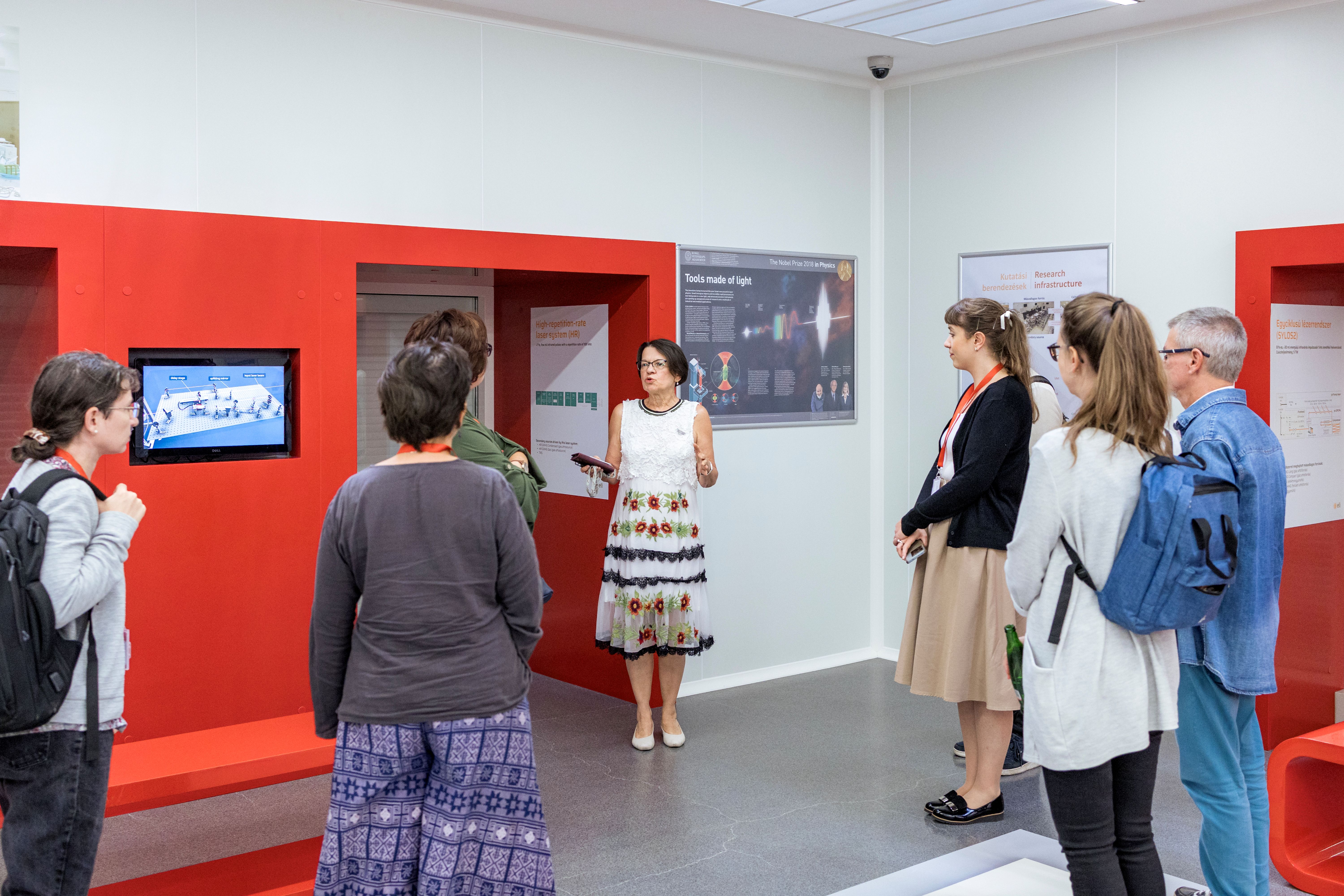
In the second half of the meeting, the focus shifted to ELI ALPS. Our colleagues presented ELI’s research in radiobiology, the potential biological applications of laser-driven neutron sources, laser-induced electron acceleration and high-intensity THz radiation, as well as the institute’s research infrastructure and laboratories.
This is particularly important because, for ELI ALPS, radiation biology is a field where the development of laser technologies and biological research can be directly linked. Developing new radiation sources is not enough in itself: we also need to know what biological questions can be answered with them, what experiments are worth conducting, and under what conditions these can be performed reliably and reproducibly.
Obviously, this work requires experts from various fields. Collaboration between physicists, engineers, medical physicists, radiation biologists and radiation therapists is essential to establishing an infrastructure based on laser sources that is suitable for genuine biological research.
“The long-term goal of ELI ALPS is therefore not merely to develop individual radiation sources or endstations. The aim is to create a research environment where different biological systems can be studied under controlled and reproducible conditions,” said Katalin Hideghéty.
Specific opportunities for collaboration
At the September meeting, several potential areas of collaboration emerged which could form the basis for joint research in the future. The topics discussed included, for example, the possibility of conducting joint experiments and specialized studies, as well as the conditions for sharing methods and knowledge.
This may be particularly important in a field where a relatively small research community needs to cover the application of a wide range of methods. Moreover, cooperation can take many forms: a special measurement method, a biological model, an instrument or even a new radiation source could all serve as a starting point for a joint project.
According to Katalin Hideghéty, the meeting demonstrated that there are several areas of research where it is worth continuing the dialogue. The next meeting is expected to be organized by NNGYK in the near future.
However, the initiative goes even further than this. One of the key tasks in the coming period will be to identify other research groups in Hungary and across Europe that are engaged in laser and radiobiology research. Apart from continuing the dialogue at home, the aim is to expand this professional cooperation to the European Union level by 2027 and to begin establishing contacts with European research groups.
The longer-term plan is to organize a European-level conference on radiobiology.