


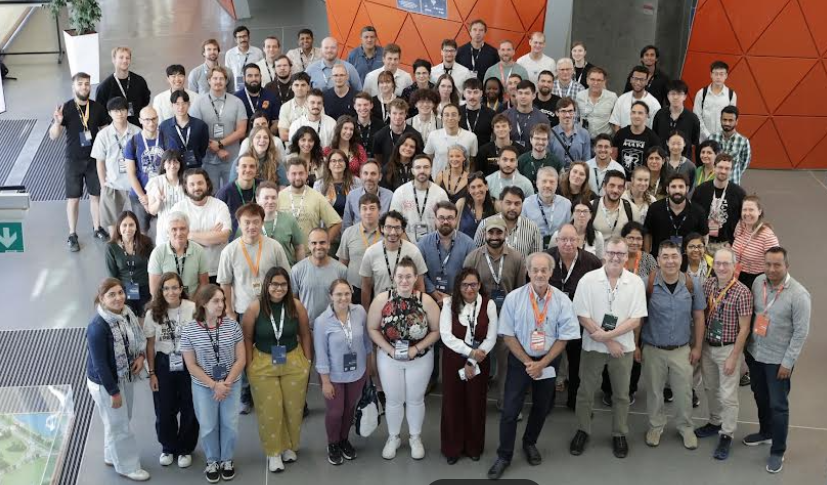
From August 31 to September 4, the ELI ALPS facility transformed into an international hub for the next generation of scientists to learn, connect, and explore the cutting edge of laser science.
ELISS offers young researchers insight into the foundations of laser science and the wide range of scientific applications it enables. By combining lectures with practical trainings, research presentations and opportunities to engage with ELI staff and speakers alike, the school helps participants expand their overview of the field, learn new skills, share their work and build professional connections.
The keynote lecture by 2023 Nobel Laureate in Physics Anne L’Huillier on the fundamentals of attosecond science and high-order harmonic generation in gases opened the weeklong programme. Her lecture traced how extremely short pulses of light make it possible to investigate electron dynamics, while pointing to the field’s next challenge of applying the methods to real world problems.
“It’s a great time to be a student, there are so many opportunities,” said Allen Weeks, ELI Director General. “The ELISS programme encourages participants to look beyond their own field and explore how scientific areas related to ELI are interconnected. Some of the most interesting scientific challenges and discoveries emerge when disciplines work together and inspire one another.
Hands-on opportunities across disciplines
The school’s programme featured sessions covered gas- and condensed-phase femtosecond and attosecond physics, laser-plasma interactions, particle acceleration, and XUV and X-ray sources. The programme also connected these capabilities with biomedical research, quantum technologies, materials science, terahertz science, nuclear photonics and space applications. Rather than treating these as separate scientific areas, ELISS showed how advances in laser performance, source stability, diagnostics and scientific expertise open new possibilities across disciplines.
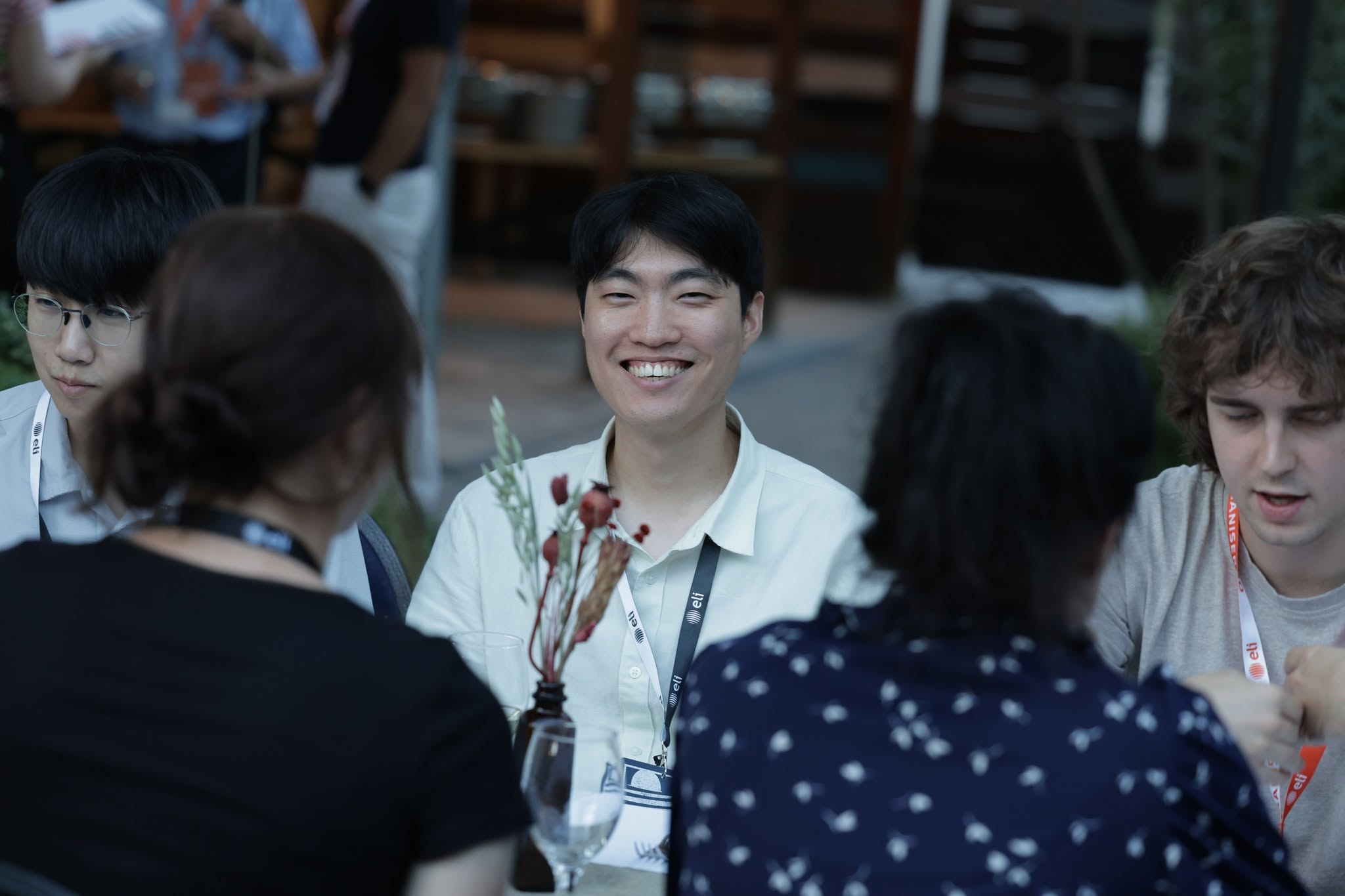
“For many students, the ELISS week is a first glimpse of what they could do at ELI,” says Gábor Szabó Facility Manager of ELI ALPS. “Stay engaged with ELI, connect with ELI’s researchers and explore the opportunities available to students.”
The lectures were paired with practical experiences of working at a research facility like ELI. Laboratory tours introduced participants to the Facility’s laboratories, laser systems, sources and experimental areas. Ten hands-on activities introduced subjects including quantum modelling, radiobiology studies, high-resolution wavefront metrology and phase matching in high-harmonic generation among others.
This practical dimension is central to ELISS, giving participants a clearer sense of the theoretical and technical preprations, how data are interpreted and how different areas of expertise work together to develop a user experiment.
Posters, prizes, partnerships
Participants play an active role during the school, contributed with 49 posters to the poster session, of which 17 were also presented as flash talks. This session gives students the opportunity to explain their work, train their presentation skills, while receiving and giving feedback which are all critical skills in research.
“I thought it was a very good early career's research conference to learn more about the applications of what lasers do,” says Eleanor Asquith, early-career researcher and laser scientists at CLF. “I really like the labs and how big they are. It's just very impressive as a facility. Meeting new people is the thing I enjoyed the most. Getting to know about people's research, getting to hear about all of the lectures and poster sessions and making connections that way.”
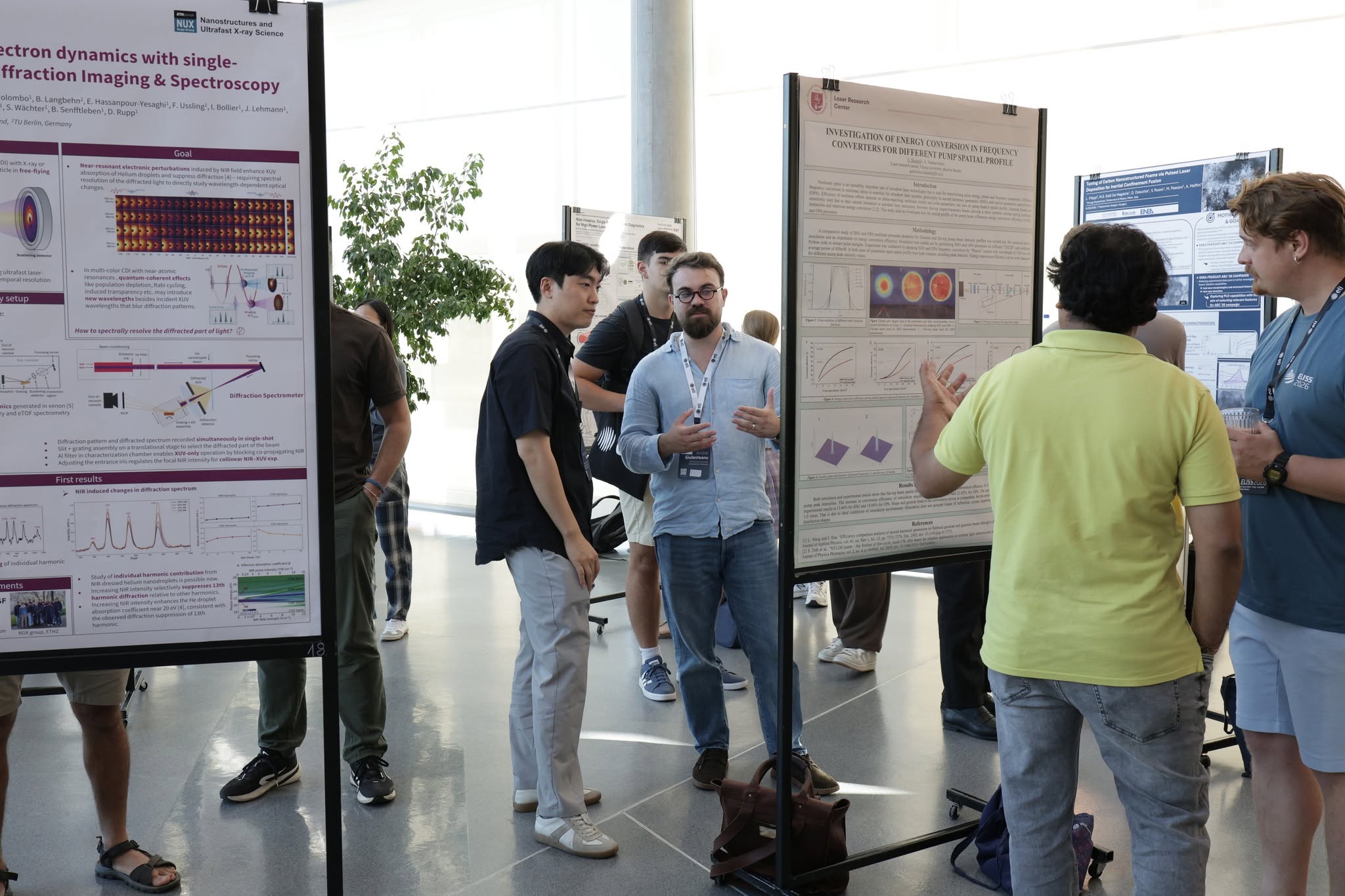
The students’ work is also recognised through the poster competition, an established ELISS tradition that rewards the best student contributions.
Joint first prizes were awarded to:
· Gabrielle Vaz, Instituto Superior Técnico for research on space-time beams for plasma superradiance
· Lucia Corrigan of Queen’s University Belfast for a study of radiobiological responses to femtosecond- and picosecond-driven very-high-energy electron irradiation
Joint second prizes were awarded to:
· Zsuzsánna Bálint and Krisztina Joós of Babeș-Bolyai University for work on carrier-envelope-phase-robust photoelectron holography
· Eran Ben Arosh of Tel Aviv University for research aimed at reducing carrier-envelope-phase dependence in high-harmonic generation
A special mention went to:
· Eleanor Asquith of the UK’s Science and Technology Facilities Council, Central Laser Facility for her investigation of how plasma mirrors affect the temporal contrast of the Astra Gemini laser
“My main reason for applying was the laboratories, seeing how scientists actually work and taking part in hands-on activities,” says PhD Student Maria Mincheva of Sofia University “St. Kliment Ohridski. “Later in your career you can also apply for beamtime with your own project at this facility which is great.”
Scientific careers develop through access to knowledge, facilities and people. Alongside the formal programme, participants met speakers, ELI researchers and networked with their peers. Students could additionally discuss training and career opportunities with HR representatives. Those exchanges are not an addition to the science; they are often where future collaborations and research directions begin.