


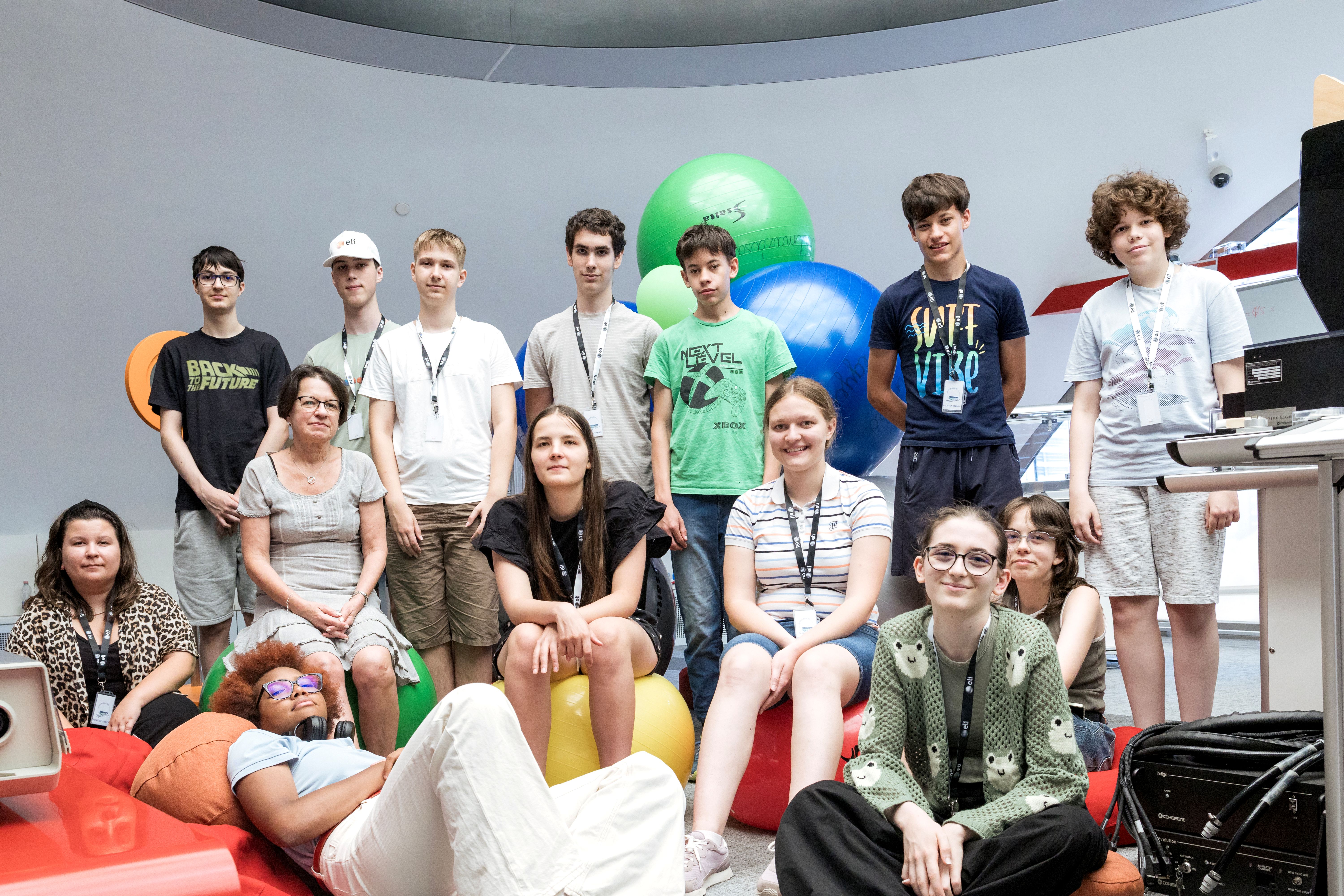
The camp, which ran from 29 June to 3 July 2026, was organized for teenagers open to exploring the world of physics. Our goal was to provide them with experiences and inspiration that would lead them to consider physics as an attractive option when choosing a career path.
The professional programme was opened by Vera Horváth, head of Fókusz – interactive visitor space. She recapped the basics of optics and photonics for the students, introduced them to our research institute’s most important equipment, and held light-hearted but informative sessions, including some with the title “Flashfacts”. During the week, with the help of our researchers, the participants built model cars, learned about the operating principle of solar cells and the physics of music waves, got acquainted with the Michelson interferometer, attosecond pulse generation, precision mirror control, and the history of the Lycurgus Cup. In connection with the latter, physicist Zsuzsanna Márton pointed out that the approximately 1,600-year-old glass object, exhibited at the British Museum in London, is considered one of the earliest applications of nanotechnology: the technique used by the artisans of the Roman Empire bears similarities to the fundamental principles of modern nanotechnology.
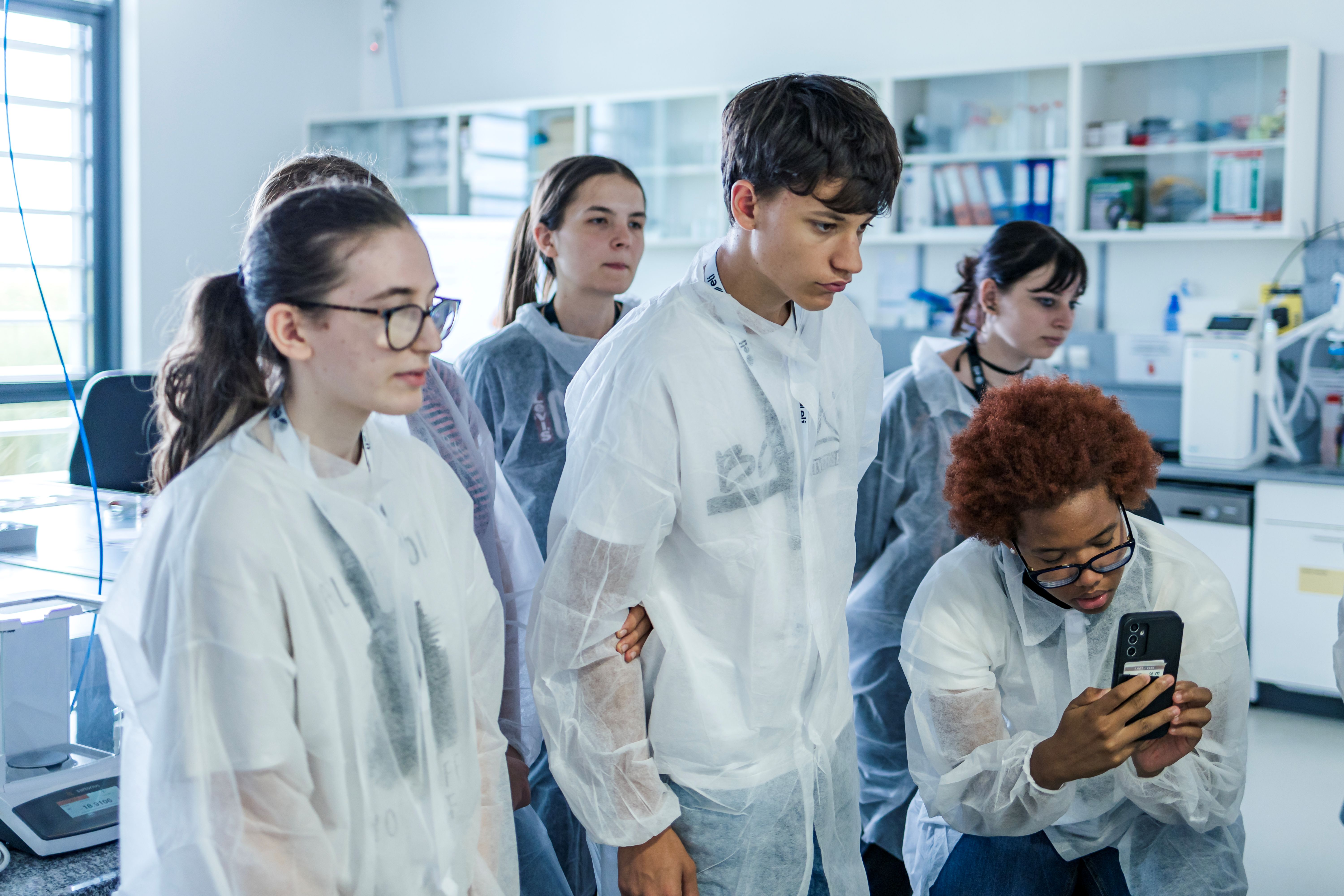
The presentations were supplemented by visits to the biomedical, chemistry, and nanofabrication laboratories, and the students were also admitted into the control room, from which the experiments can be controlled safely. On Friday, they watched experimental demonstrations and visited a few more laboratories at the Institute of Physics at the University of Szeged. Time was also allocated to recreational activities: the campers had the chance to put their skills to the test in a laser tag battle.
The most important thing is to spark curiosity
Szabolcs Hack gave a talk titled “When nature plays dice – an introduction to the strange world of quantum physics.” As he put it, the title itself suggests that in quantum physics, probability is not merely a consequence of our ignorance, but a fundamental part of how nature works.
“If we can convey this idea in a way that encourages students to ask questions, engage in debate, or even feel a little uncertain about their own common sense, then the lecture has already achieved its goal,” he said.
According to our research fellow, it is a special experience to give presentations to secondary school students who have an innate openness to the natural sciences. He believes that the most important thing at a camp like this is not to instil as much knowledge as possible, but to show that physics is a vibrant, exciting science full of open-ended questions.
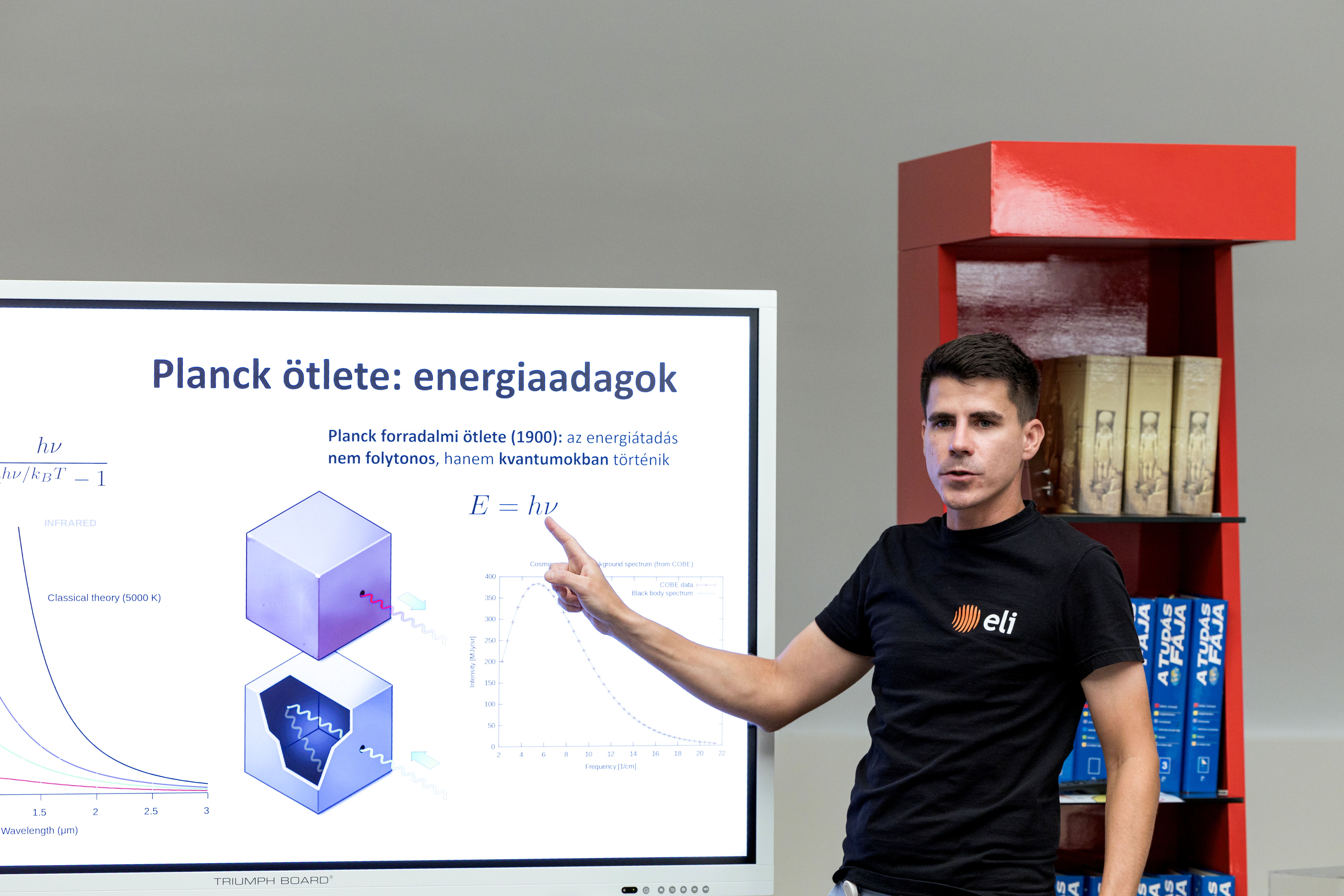
However, a talk to be delivered to this age group requires a totally different kind of preparation than a college class. While the latter may place greater emphasis on mathematics and formalism, the most important thing when teaching secondary school students is to spark their curiosity. That’s why he guides his audience through the world of quantum physics using thought experiments, everyday analogies, and surprising questions. In his view, the double-slit experiment, Schrödinger’s cat, and the debate between Einstein and Bohr are particularly well-suited for this purpose because, based on their own intuition, students almost always initially expect a different result than what nature actually reveals.
Building on a point made by his colleague, research fellow Viktor Pajer noted that one of the biggest challenges is presenting extremely complex topics in a way that is understandable to secondary school students while remaining scientifically accurate. “Based on several years of experience, this is getting easier. These camps are important because they allow students to encounter topics they haven’t yet covered in secondary school,” he said emphasizing his belief that an important part of teaching physics is ensuring that students do not just listen to lectures but also conduct their own experiments. There are always one or two students who ask questions even during breaks and come up with new ideas for things to try. These moments mean a lot to him, too.
Engaging lab experiences
Luca Konkoly, a student at Lehel Vezér Secondary School in Jászberény, grew fond of physics in secondary school. She applied to our camp to boost her understanding of the subject beyond the school curriculum. She is particularly interested in optics, but she considered it just as important to meet other young people with similar interests.
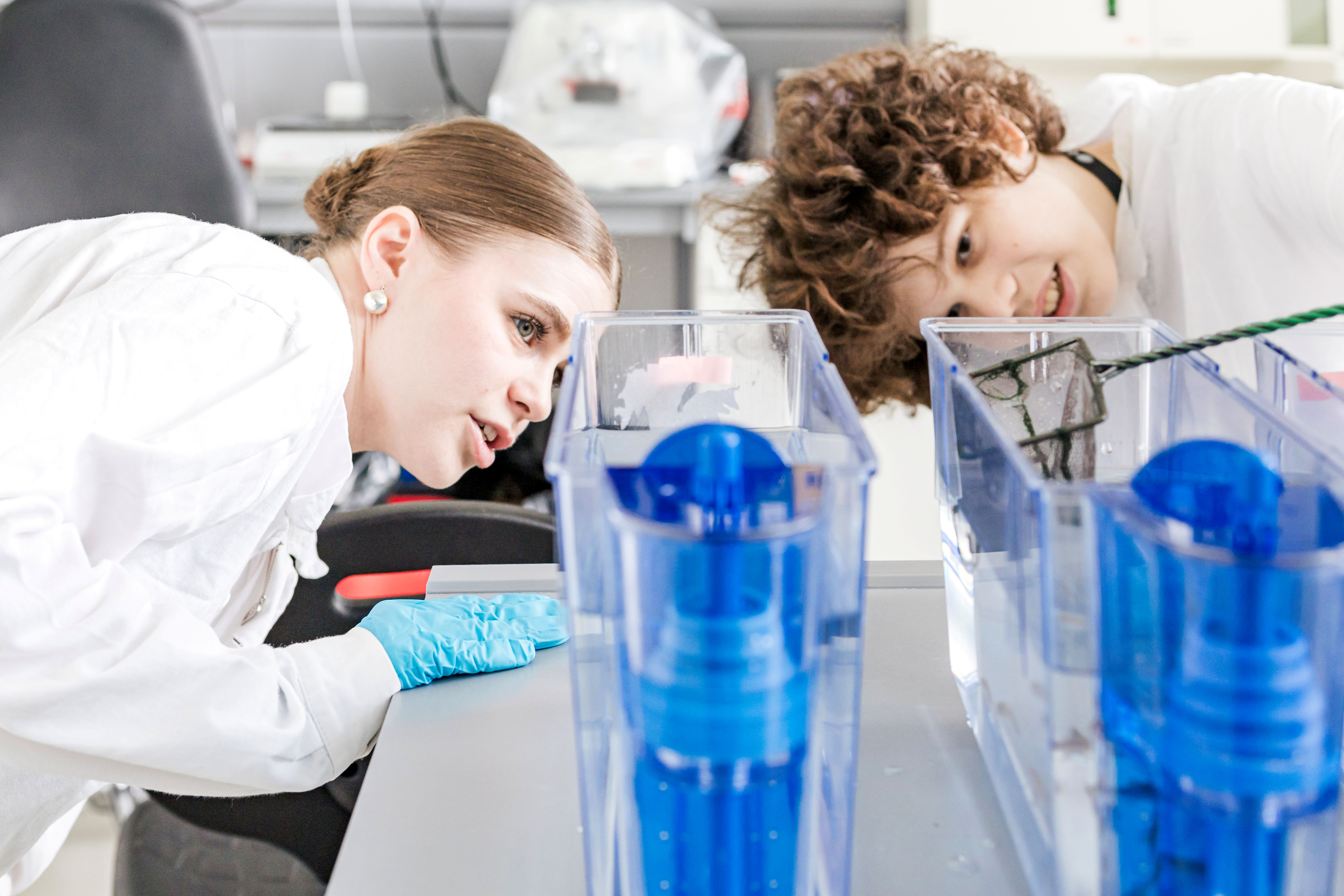
“We girls became especially good friends, and we have already decided to meet up again later, either in Szeged or Budapest,” said Luca, for whom physics plays a defining role in her future plans: she is interested in a career in physics, technology, and engineering alike. She considered the lab visits as the highlight of the week, because they allowed her to see what she had learned in theory through practical examples.
Márta Tóth, a Year 10 student at Veres Pálné Secondary School in Budapest, reported similar experiences; she wanted to continue studying physics during the summer holiday, as she is preparing to take physics as an elective subject next year. Although she had already been introduced to the basics of optics and quantum physics at school, she needed more background knowledge in mathematics to understand the more complex topics. Whatever she did not fully understand during the day, she looked up in the evenings.
“This week proved to me that the research institute in Szeged is one of the most advanced institutions of its kind in the world. Until a few weeks ago, I had no idea that such an institute even existed in Hungary,” she said, summing up her five-day experience.
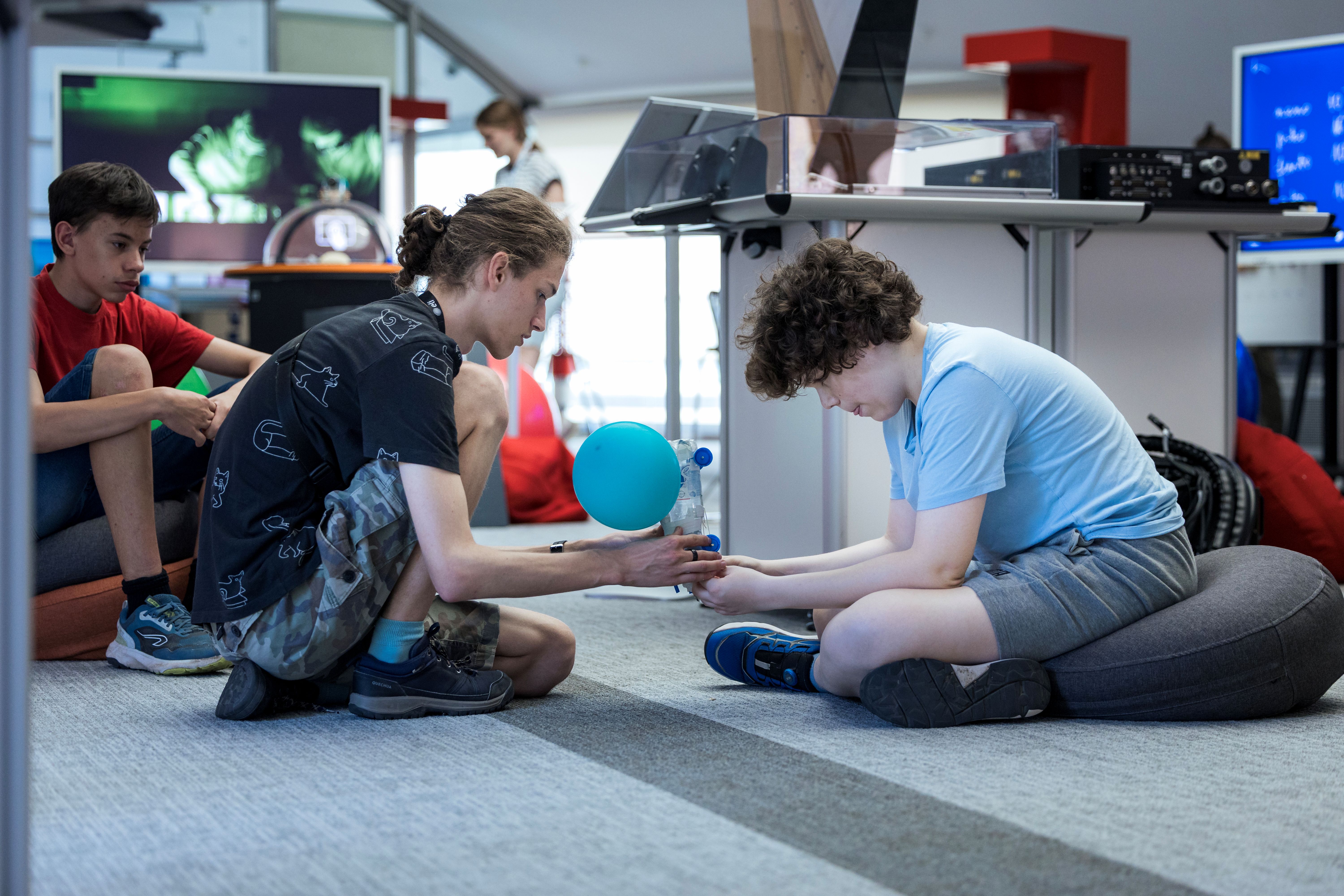
Sámuel Nelissen, a student at Miklós Radnóti Experimental Grammar School in Szeged, has a family-driven interest in physics: his father, Kwinten Nelissen, is a colleague of ours, which is why he wanted to get a closer look at the world of research. Although he is currently more drawn to careers in aerospace and space engineering, physics remains one of his favourite subjects.
“What I liked most was that we got to hear about the latest research projects and technologies, such as quantum dots and plasmonic nanoparticles. I wish we had engaged in more lab measurements and interactive experiments, because they make it easier to understand theory,” he said.
The knowledge gained can earn students extra admission points
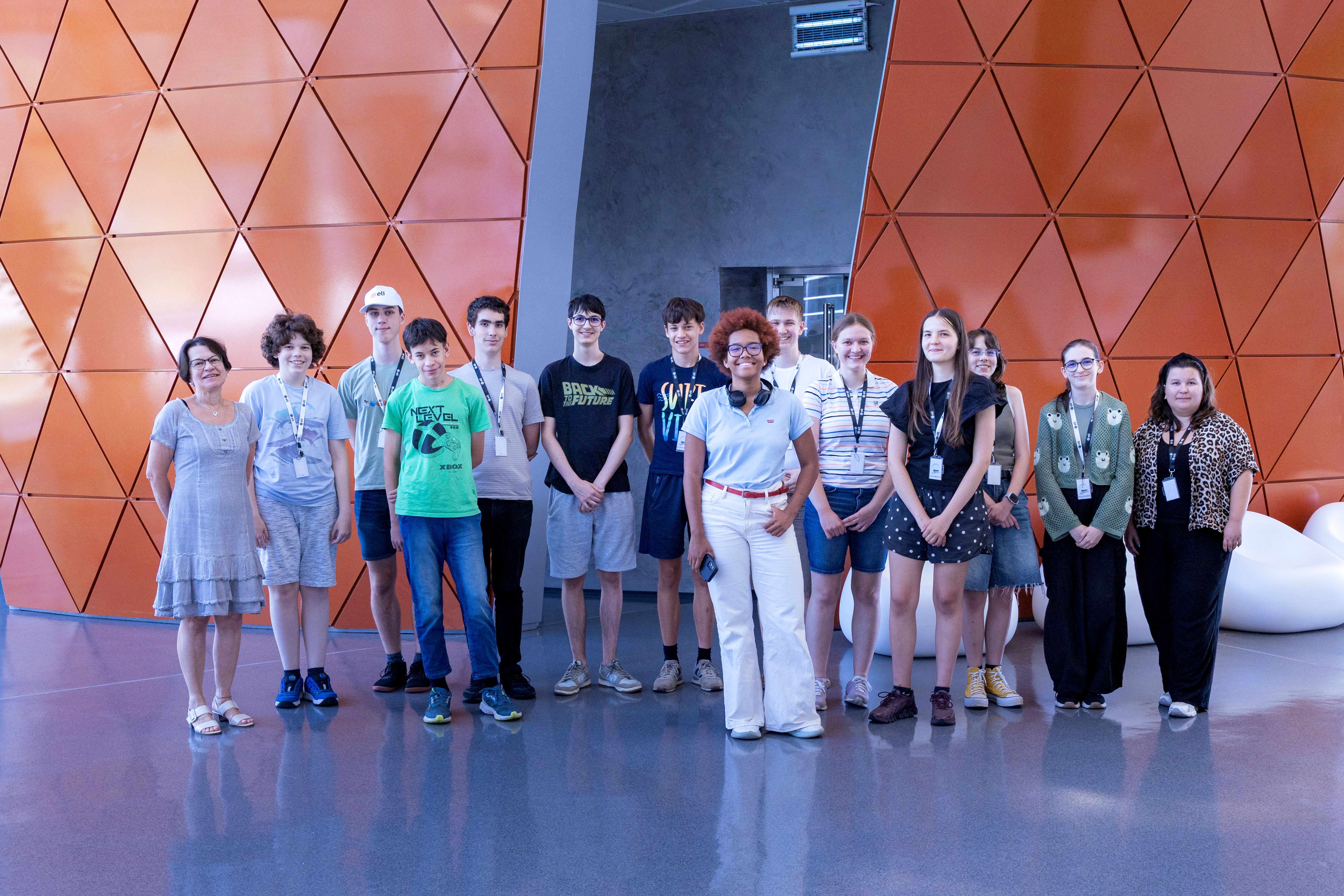
On the final day of the camp, the participants took a test. Students who scored at least 80 percent are eligible to receive 25 extra points when applying to the degree programmes of the University of Szeged in physics, physics education, bioengineering, environmental engineering, chemical engineering, and physics and engineering. These extra points can be used even if they do not apply during the next admission period. Six of the 15 campers successfully met the requirement.
Our research institute will organize its summer camp again next year, where we look forward to welcoming physics lover secondary school students with new exciting topics, lab visits, and the opportunity to earn extra points that can be used in the admission process.