


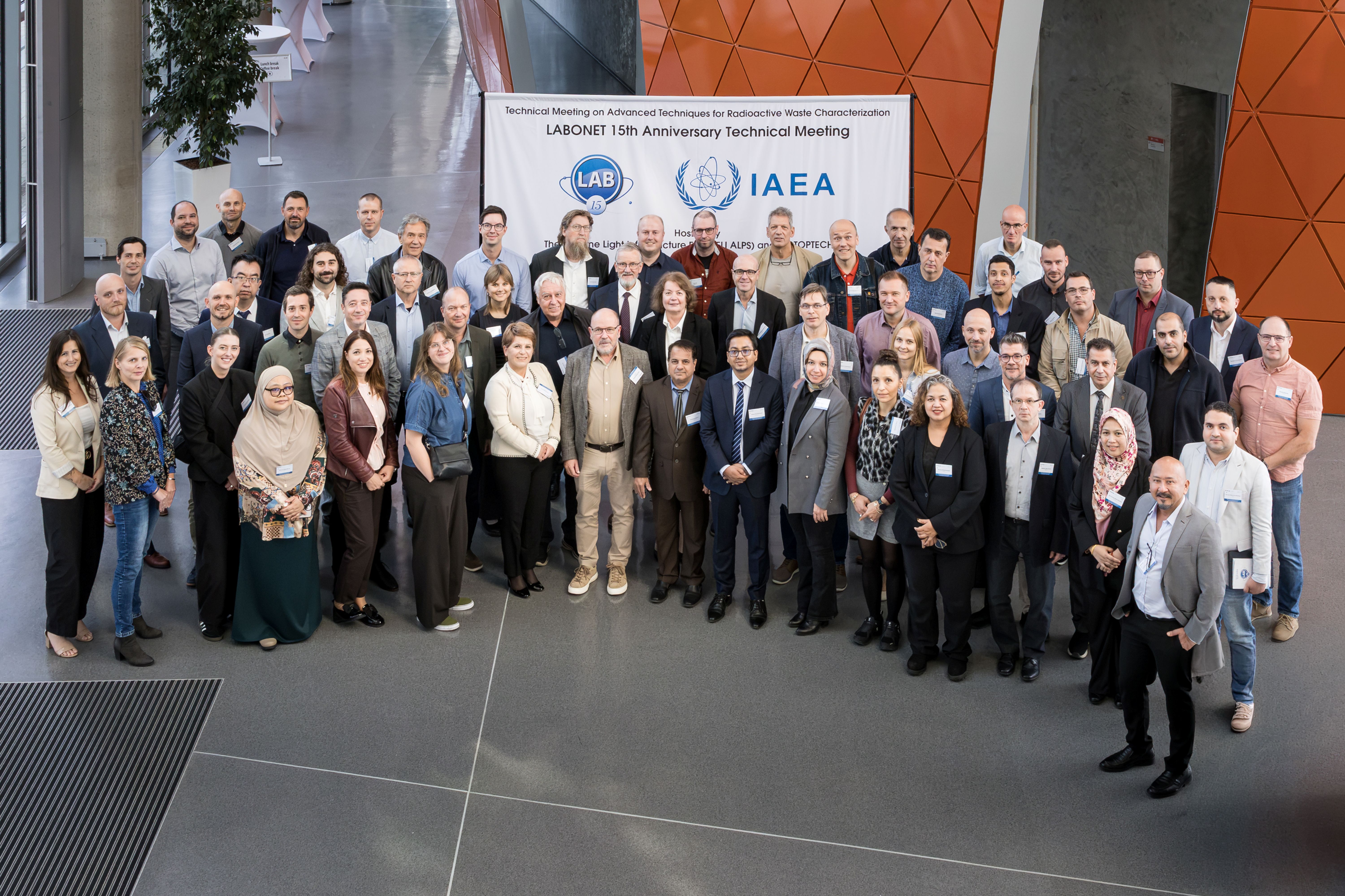
Participants also learned about the scientific and technological capabilities of ELI and explored how methods can facilitate the analysis of radioactive waste.
The International Atomic Energy Agency (IAEA) operates an international network called LABONET (International Network of Laboratories for Nuclear Waste Characterization), which is dedicated to the characterisation of radioactive waste. The organization, founded in 2011, held its fifteenth Technical Meeting from 5 to 9 October.
The event, held at the ELI ALPS Facility, Szeged, brought together 74 participants from 42 countries, including representatives of the IAEA. Of these, 56 attended in person, while 18 participated virtually. The meeting attracted experts from across the world, including Belgium, Brazil, Greece, France, the Netherlands, Canada, China, Lithuania, Malaysia, the United Kingdom, Romania and Türkiye.
The safe management of radioactive waste relies on accurate characterisation of its composition and radioactivity. LABONET, an international network of experts, promotes knowledge exchange, best practices and technical cooperation to improve radioactive waste characterisation.
The meeting also featured a dedicated session on ELI, exploring the potential of its advanced analytical and laser-based technologies for radioactive waste characterisation and related measurements. The session connected these capabilities with the characterisation and measurement challenges faced by the LABONET community, including discussions of imaging and materials analysis. The presentations also highlighted ELI’s role as an international research infrastructure, its broader scientific and technological activities, and the medical applications of laser-based neutron sources. The programme concluded with a guided tour of the ELI ALPS Facility, giving participants an opportunity to explore its laser systems and laboratories and discuss possible connections between advanced research and radioactive waste management.
The 15th LABONET Technical Meeting highlighted how ELI’s advanced analytical and laser-based technologies could contribute to addressing measurement challenges in radioactive waste characterisation. It also opened up opportunities to explore how these capabilities could support the work of laboratories in the LABONET network, fostering practical cooperation between ELI researchers and international experts in radioactive waste management. The meeting also brought together complementary perspectives on research, analytical practice and disposal operations, strengthening the professional connections supported by LABONET and creating opportunities for further dialogue on areas of mutual interest.