


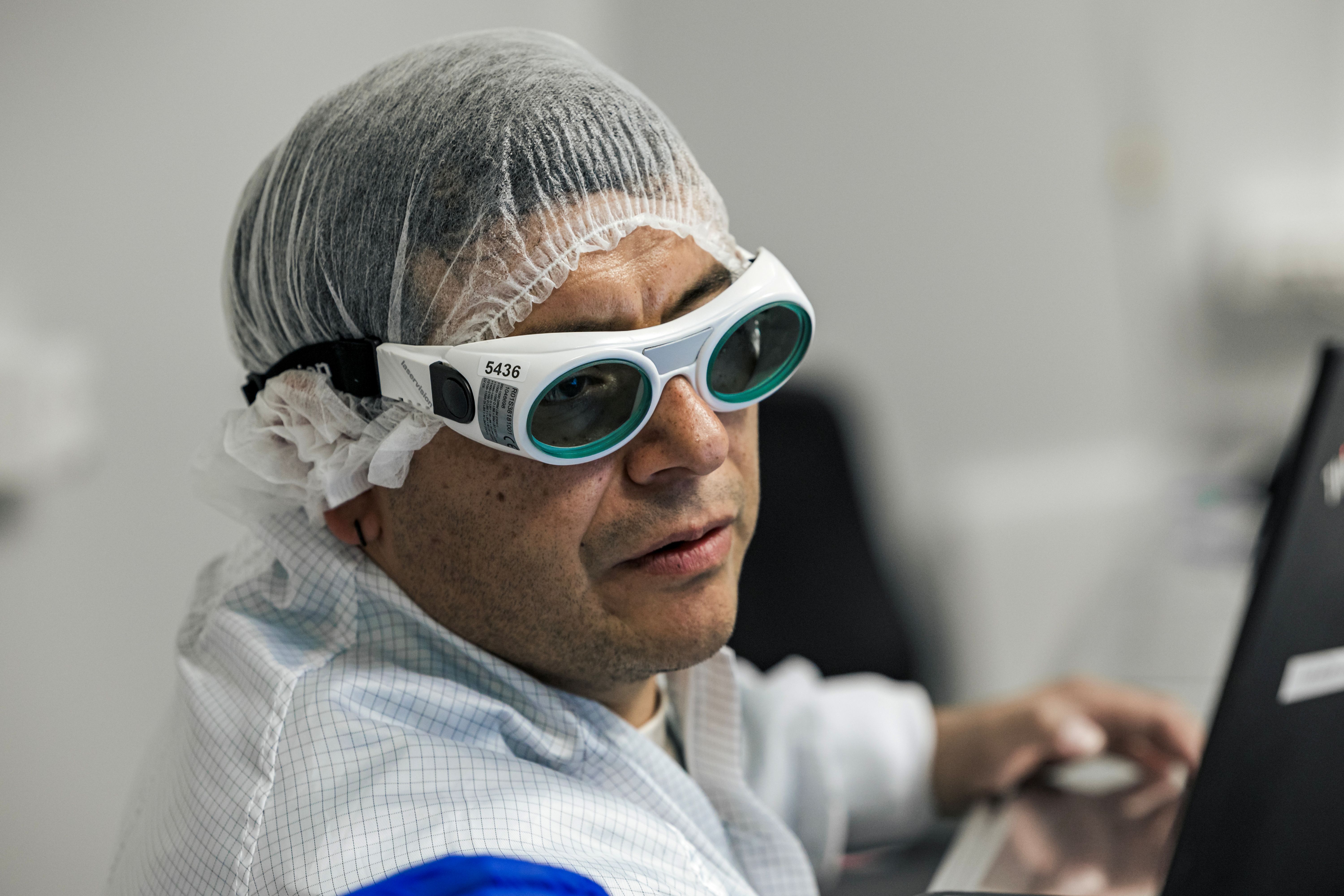
You were born in Colombia, and ever since you were a small child, your dream has been to become a scientist.
Yes, although at the time I did not yet fully understand what being a scientist, especially a physicist, meant. Physics came most naturally to me in school, and I was especially fascinated by the study of light. Questions such as how light can help us gain new insights into matter captured my imagination. This interest led me to focus on laser–matter interaction and laser spectroscopy. I have always been driven by a desire to understand why and how things happen.
How did your career begin?
In Colombia, I completed my bachelor’s degree in physics. I then moved to São Paulo, Brazil, where I completed my first master’s thesis in theoretical physics. Later, in Salamanca, Spain, I earned a second master’s degree, focusing on lasers and laser technology. Then I obtained my PhD at KU Leuven in Belgium, with a dissertation on high-resolution laser spectroscopy of radioactive elements (chemical elements that do not occur naturally on Earth). The next stage of my career took me to CERN, where I worked as a postdoctoral researcher, continuing my work in laser spectroscopy. From there, I moved to the Max Born Institute in Berlin, where I began working on ultrafast spectroscopy. Later, I joined the Institute of Material Physics and Chemistry in Strasbourg before returning to Berlin. Then the war in Ukraine began.
The outside world often associates Colombia with its violent past. Was violence part of your life too?
I grew up in a small town in Colombia, where intimidation was a daily reality. That is why it was very difficult for me to see a war break out again, so close to home in Berlin. Because of the war, many Ukrainians moved to Berlin, and I heard numerous harrowing stories from them. This reminded me of the difficult past we had in Colombia. At that moment, I decided to leave Europe. I received an offer to work at the Guangdong–Technion Institute in the south of China. Later, I started my current position as a research assistant professor at the Eastern Institute of Technology in Ningbo, China.
How did you first come into contact with Szeged?
Laser physicists help one another. During a professional consultation, Paraskevas Tzallas, a staff member at the Szeged user facility, first told me about ELI ALPS. I subsequently submitted a proposal to the ELI User Programme, which was approved. I first came to Szeged in August 2025. Last august, my second application was also accepted, so in the spring of 2026, I returned for another five-week research campaign.
What topics within laser physics interest you?
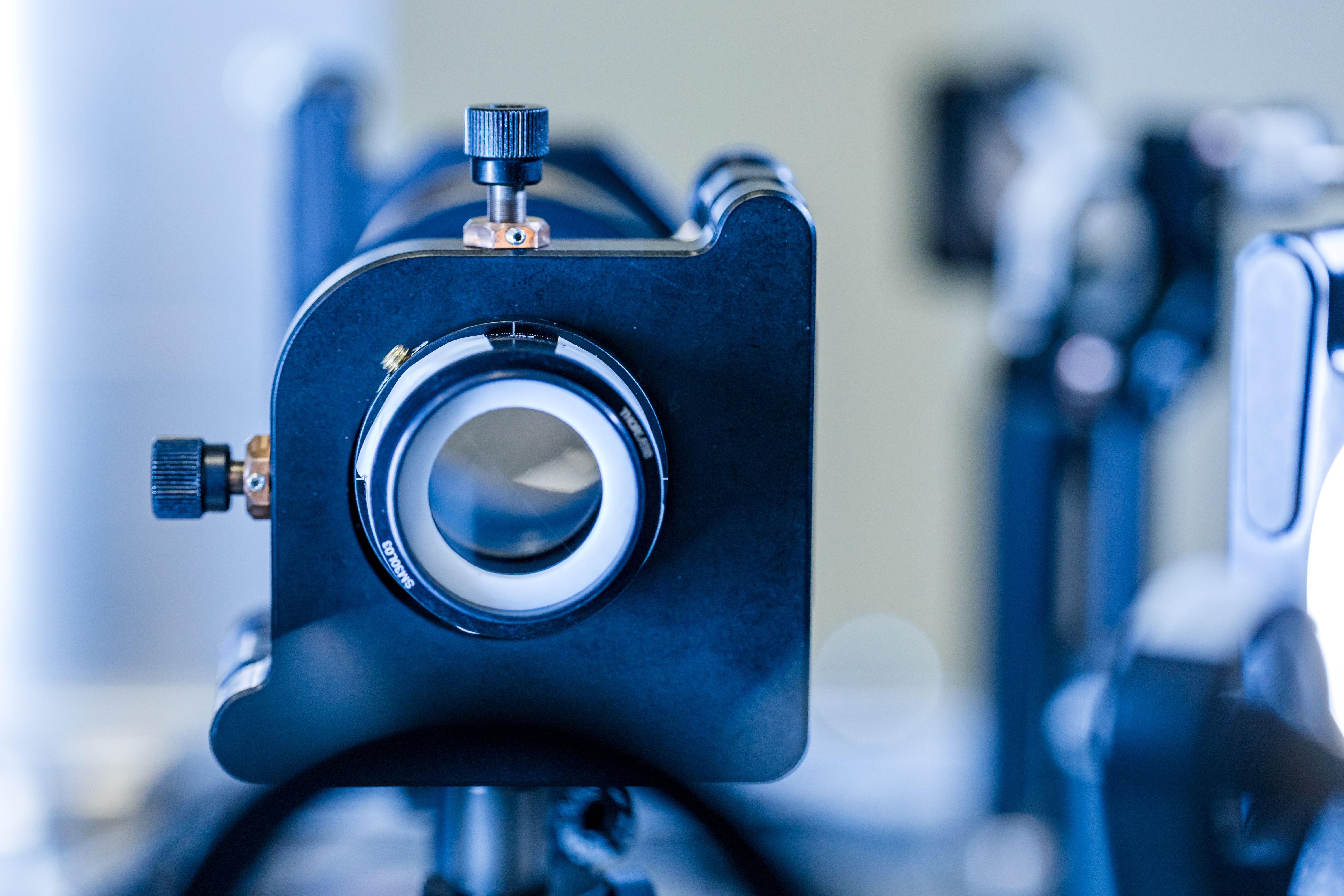
I work with lasers that can be shaped to behave like vortex beams, also known as twisted light. Imagine a hurricane-like structure rotating around a calm central core. While ordinary laser light has a simple structure, vortex beams have a twisted, corkscrew-like wave pattern. The experiments conducted in the MIR laboratory aim to understand how this form of light interacts with solids and what physical phenomena result from this interaction. More importantly, we explore the extent to which we can study matter under highly controlled and extreme conditions created in the laboratory. This helps us better understand nature and develop mathematical models that describe newly observed phenomena.
Over the course of five weeks, the team investigated how vortex beams interact with solids to generate harmonic light in the visible and vacuum ultraviolet (VUV) regions of the spectrum. We studied whether the interaction between the solid and the twisted light could generate new colours of light that combine to form extremely short bursts. Under the right conditions, this process can produce attosecond pulses, i.e. flashes of light lasting only billionths of a billionth of a second. These pulses can be used to study phenomena in nature that are sensitive to the twisted structure of light. For example, chiral molecules, compounds whose mirror images cannot be superimposed on one another (like left and right hands), as well as chiral reactions and chiral solids.
Another objective of the research was to understand how angular momentum is transferred during the interaction between light and matter. We investigated whether this transfer could be controlled and whether the properties of the resulting harmonic light could be engineered in a predictable way.
What were your results?
Thanks to new developments at the MIR laboratory, we have been able to demonstrate that during the generation of light in the solid target, orbital angular momentum can be redistributed among the different high harmonics (different colours). This was unexpected under the experimental conditions we prepared and in the region of the electromagnetic field we studied.
Could these findings be useful for other researchers?
More work is needed to understand how the knowledge gained can be applied, for example, in ultrafast laser spectroscopy. Further research will be required to explore the potential applications of this finding. For now, many questions remain unanswered. But if we manage to demonstrate attosecond twisted light in the lab and control its orbital angular momentum, many areas, such as chemistry and biology, could benefit from the technique.
What do you think of the ELI ALPS Facility?
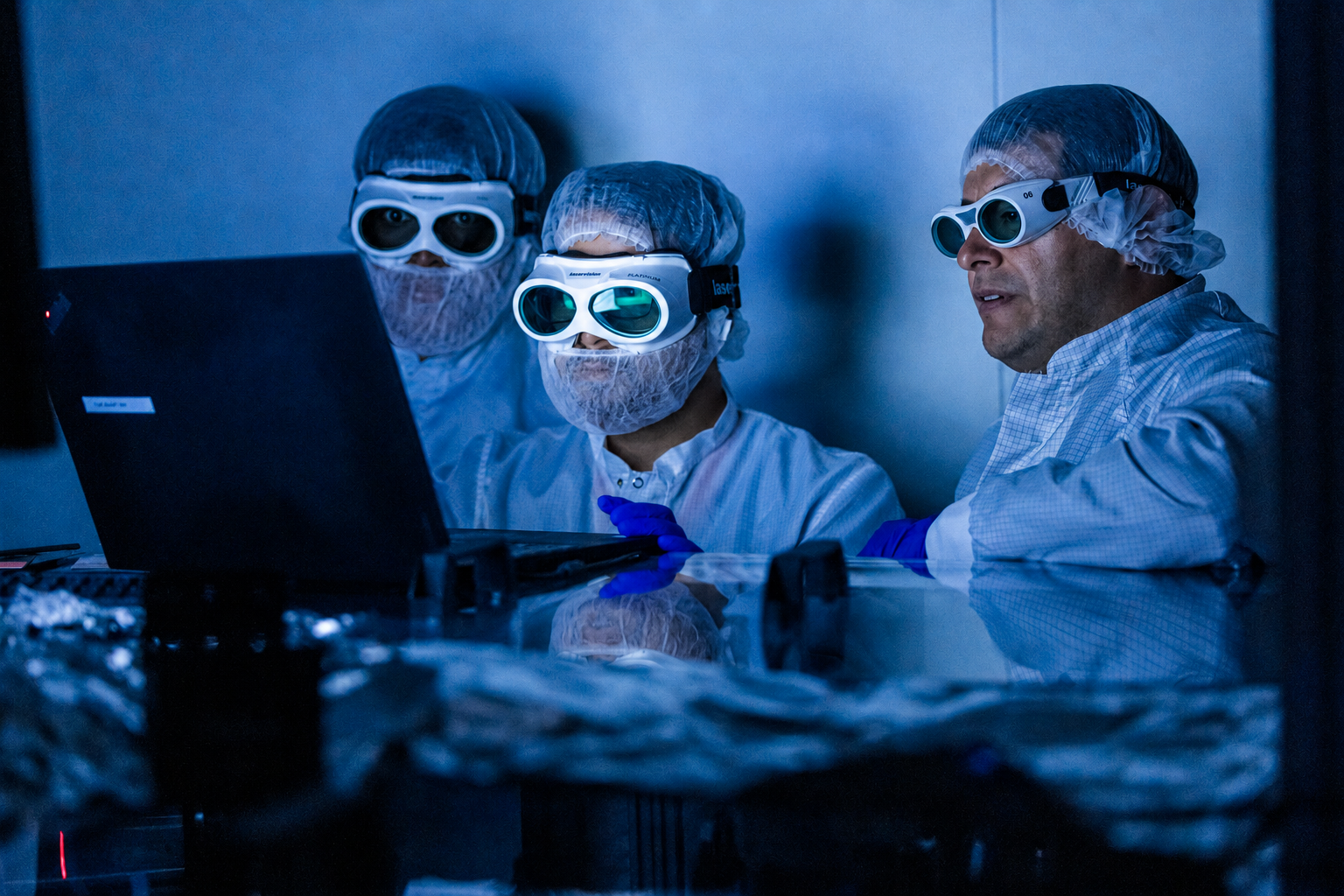
This is an extremely user-friendly facility. I consider it a fantastic place. The lasers are top-notch, and the local technical team is highly skilled. They speak my professional language, which makes collaboration very straightforward. Thanks to them, researchers can carry out their work much more easily.
The local technical team plays a crucial role in helping bring my ideas to life. At the same time, they are honest about what is not yet technically feasible and what may become possible in two years or more. They clearly explain the current technological limitations in the laboratory. Fortunately, thanks to the facility’s outstanding capabilities, researchers are still able to achieve an incredible number of new discoveries.
The laboratories here give young researchers like me the opportunity to test their ideas. It is a huge advantage that we do not need to secure funding to build a world-class research infrastructure like the MIR laboratory—it is already available to us. We can focus entirely on research and experimentation. This gives us the chance to see our dreams come true.
Is it possible that you will return to Szeged for research a third time?
I would love to return here year after year because this is where I can conduct cutting-edge experiments using some of the best equipment in the world. Here, I have access to instruments that are not available anywhere else. Additionally, we have done a fantastic job until now, and we need to continue it.