


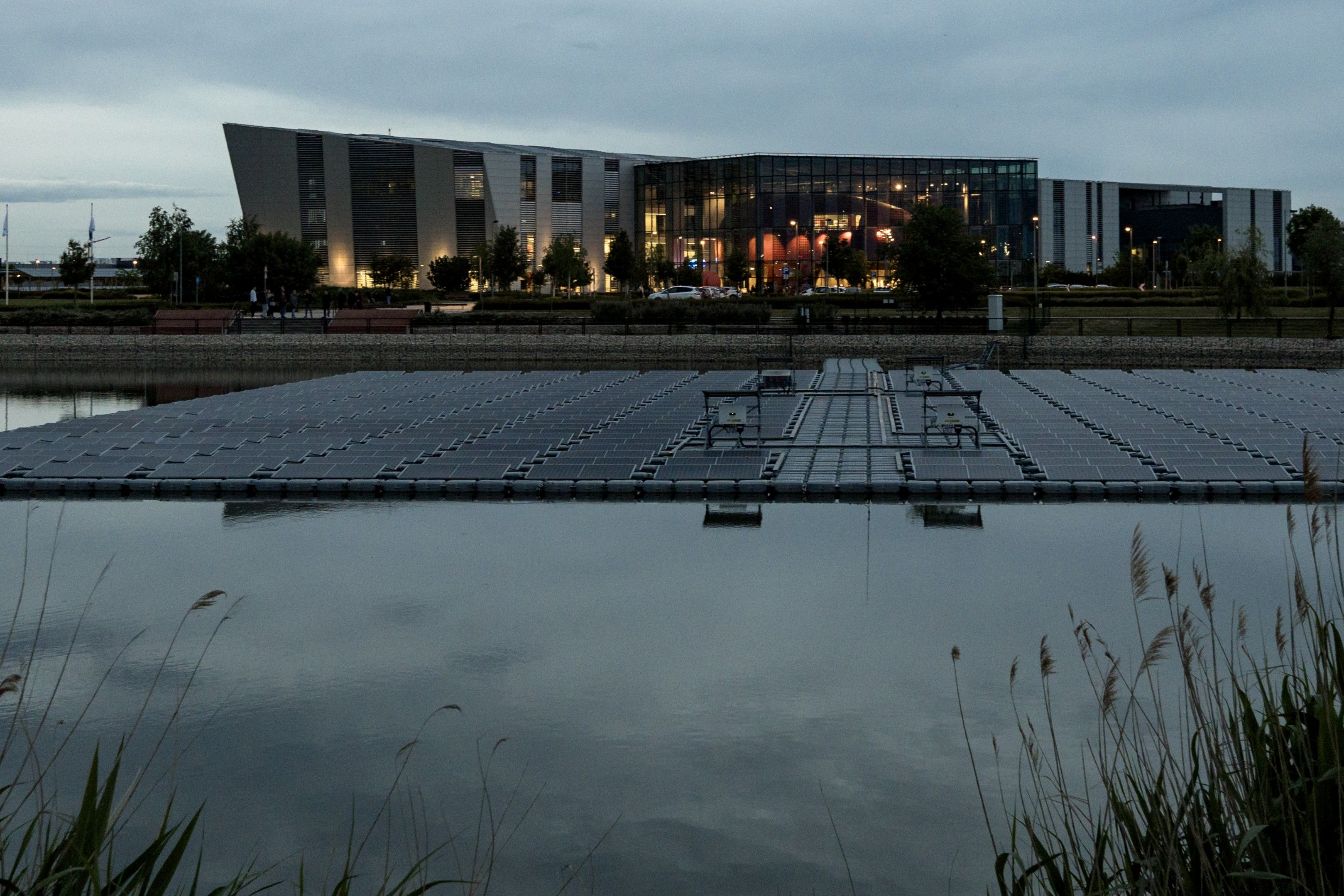
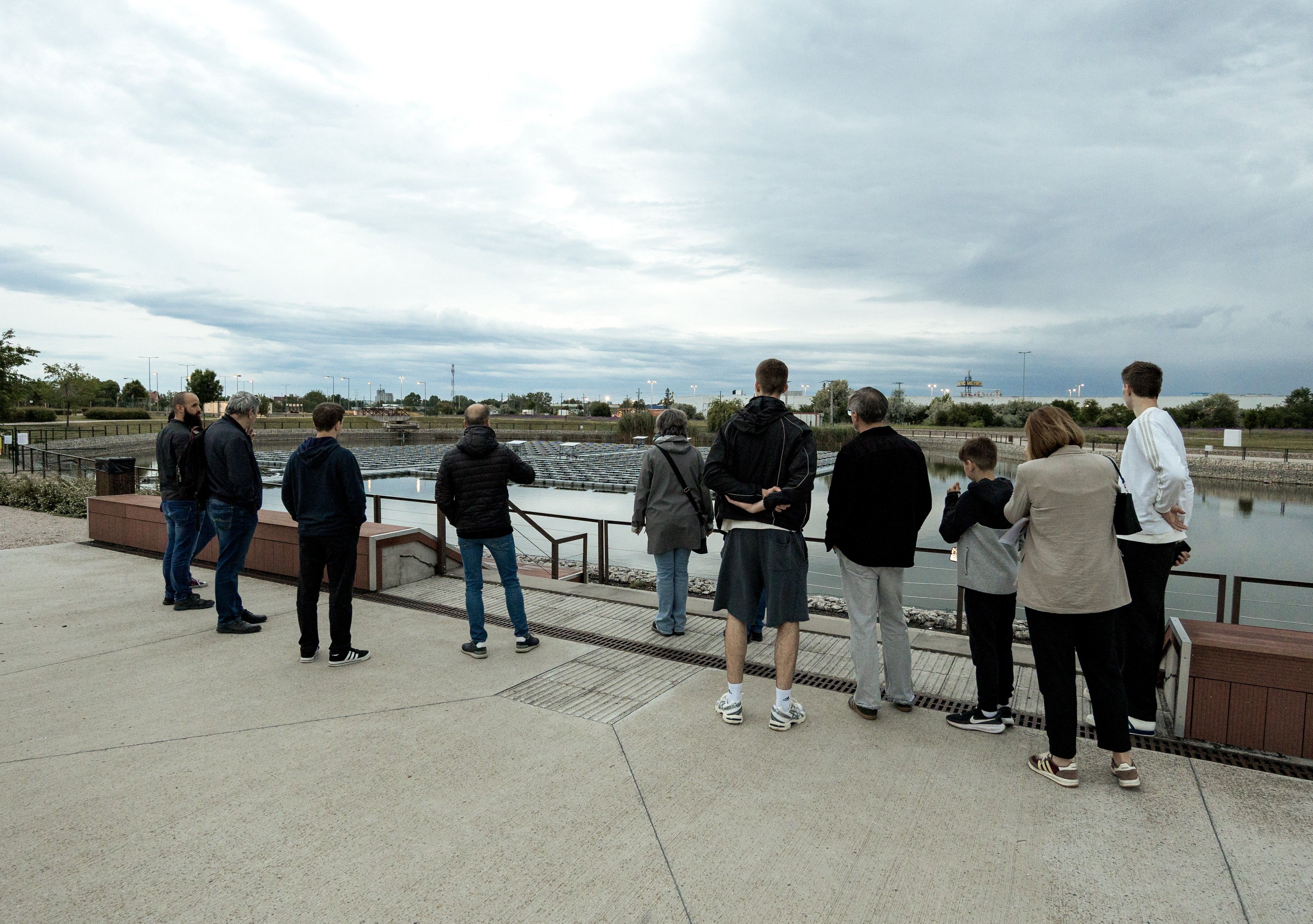
Since last November, electricity supply to ELI ALPS has been supported by a solar power plant, and this year’s Day of Light event was the first opportunity to show this renewable energy harnessing system to the general public. During the construction of the power plant, several innovative technologies were employed. For example, the parking lot was equipped with carport-mounted solar panels and dynamic sun-trackers were also installed on our premises. The solar panels floating on the rainwater collection pond having a surface area of approximately one hectare south of the ELI entrance, is the first investment of its kind in the country. During the development project, as many as 13,460 solar panels were installed, and the system has a total capacity of 4.9 megavolt-amperes.
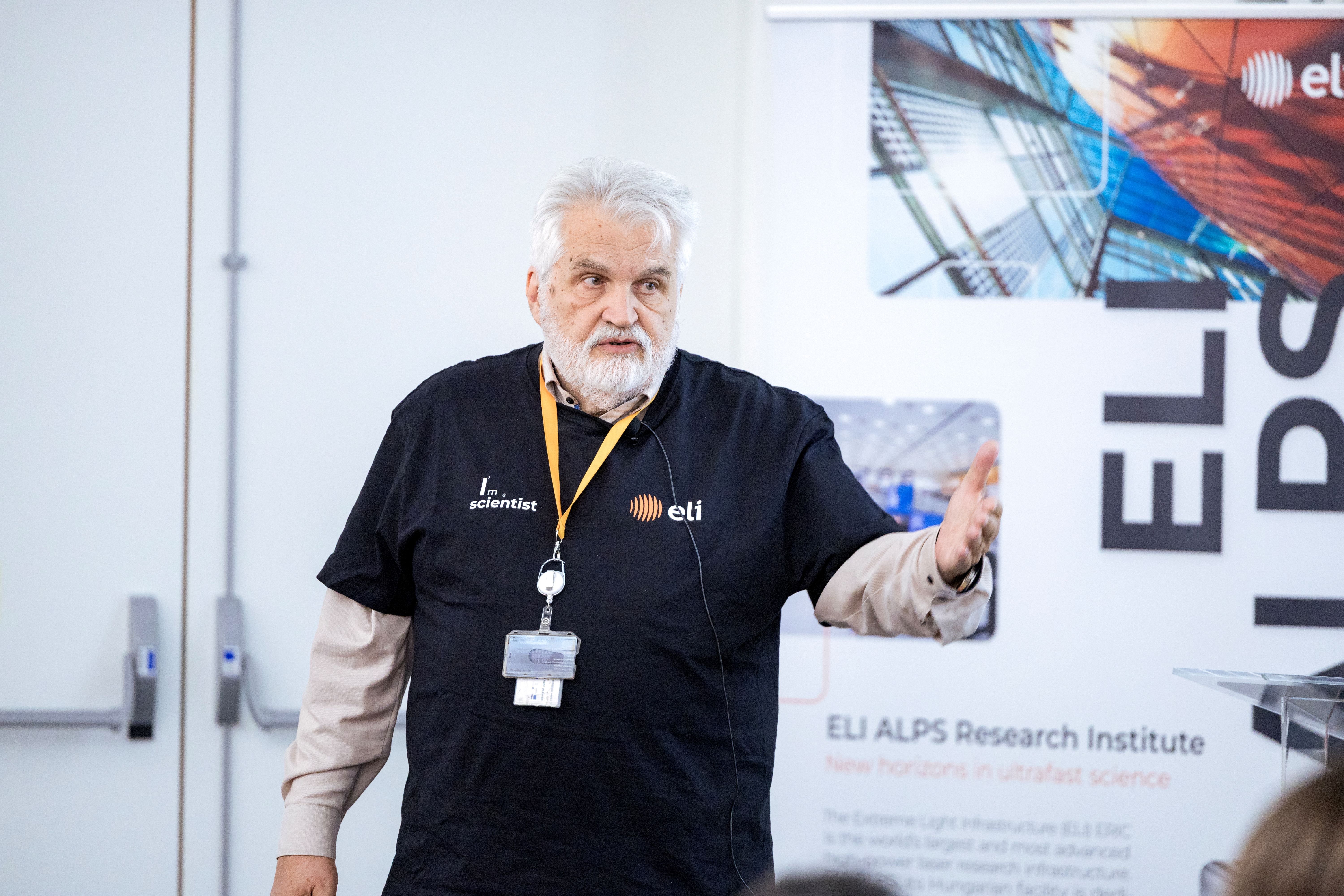
During the event, our managing director, Professor Gábor Szabó, gave a talk on why ELI ALPS is one of the world’s greenest scientific research institutes and how sustainable energy use is connected to research on extreme light. “The construction of the solar power plant is an important step and an environmental project of outstanding significance. We expect to save 35 to 38% on our electricity bill through the use of renewable energy, but if we could store the excess energy generated during the summer, that figure could reach as high as 50%,” he pointed out.
We also have great expectations regarding the floating solar panels installed on the pond. Mounted on recycled plastic panels, these solar panels also harness the light reflected off the water’s surface. We hope that the solar panels will cool the water sufficiently during the summer heat to significantly improve water quality.
The construction of the solar power plant raised the issue of relocating the existing trees, but according to an expert study, maximum half of them would have survived the process. In place of the felled trees, we set up a so-called Miyawaki forest consisting of fast-growing, densely planted vegetation. The mini forest is named after Japanese botanist and ecologist Akira Miyawaki, who developed a method for restoring small areas with natural vegetation. A Miyawaki forest is a small plot of land – sometimes just a few dozen square meters – where many different species of native trees and shrubs are planted. We planted 1,950 plants on 750 square meters, which is far more than the number of trees that had to be cut down to make way for the project.
In addition to the two new features at our event, i.e. the solar power plant and the Miyawaki forest, we once again attracted visitors with a variety of activities, staying true to our traditions. But what exactly do we celebrate on this day?
The International Day of Light is celebrated worldwide on 16 May to commemorate that on this day in 1960, American engineer Theodore Maiman demonstrated the first working laser. The initiative was launched under the auspices of UNESCO, with the aim of raising awareness of the role of light and light-based technologies in science, culture, and everyday life.
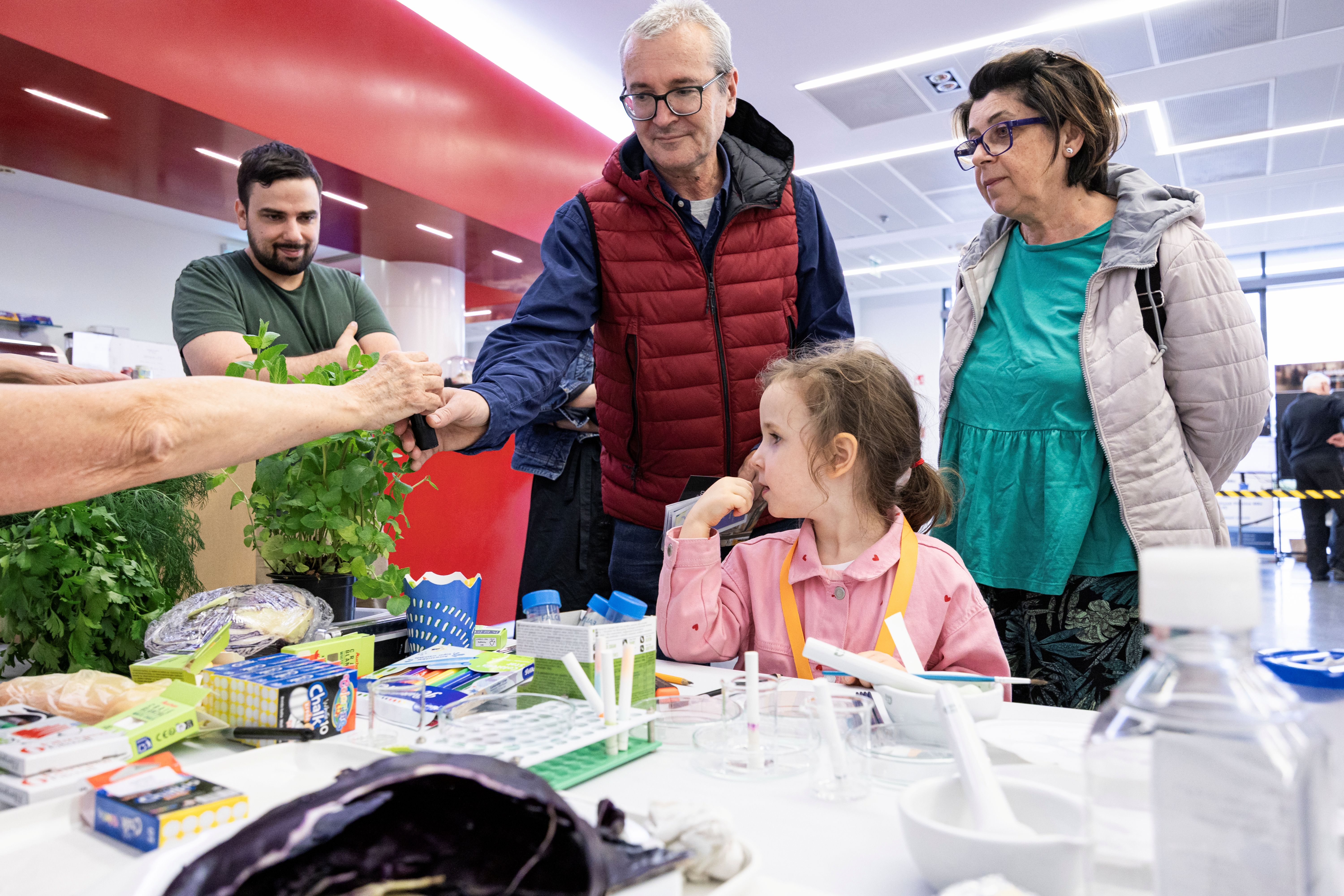
Our mission is to popularize science and present the wonders of nature in an easy-to-understand way. In line with this, we welcomed visitors with chilling experiments and discussions on gravitation, black holes, and dark energy. Our guests could observe ultrafast processes, we shared with them the secrets of the Optical workshop, and we demonstrated the propagation of electromagnetic waves. We talked about magical waves, and anyone who felt like it could also engage in adventures in a virtual lab. In the demonstration titled “Simple experiments,” lemon and milk played an important role alongside the experimenters: Aaishi and Aariyana Kahaly, as well as their mother, Mousumi Upadhyay Kahaly, a physicist at our institute.
“My father, Subhendu Kahaly, who also works at ELI ALPS, is a physicist too. I suppose no one is surprised that I chose physics as an elective subject in year 11. It’s probably because I’ve always found physics interesting and easy. But I also love biology, because ever since I was little, I’ve wanted to be a doctor (too). So right now, I’m not really sure what I want to do later on. “By the way, I’m in the maths class at Radnóti Miklós Secondary School in Szeged,” said Aaishi Kahaly between two experiments. Because of her family background, she knows more about physics than the average secondary school student and can therefore help her classmates when they don’t understand something. Aaishi also has a keen interest in experimentation; she loves demonstrations that end with something sparking, exploding, or making a sound. In secondary school, she often demonstrates experiments in front of her class. This means that she is used to appearing in front of an audience, yet she found it unusual that most of the people interested in our event were adults. She would like to see people of all ages to be interested in science, because it is both useful and enjoyable.
“What caught the boys’ attention? I think it was the sweet treats and the experiments. I’ve never been here before, even though we are from Szeged. Plus, my sister-in-law’s brother works here. The boys said they wanted to see the laser centre, because they thought they could definitely fight with light sabres here,” laughs Éva Szalai, who arrived with her three-, seven-, and twelve-year-old sons. Physics has always been close to her heart, not only because her husband graduated as a physicist from Szeged, but also because, as a philologist, she realizes that this field of science is truly part of our everyday life.
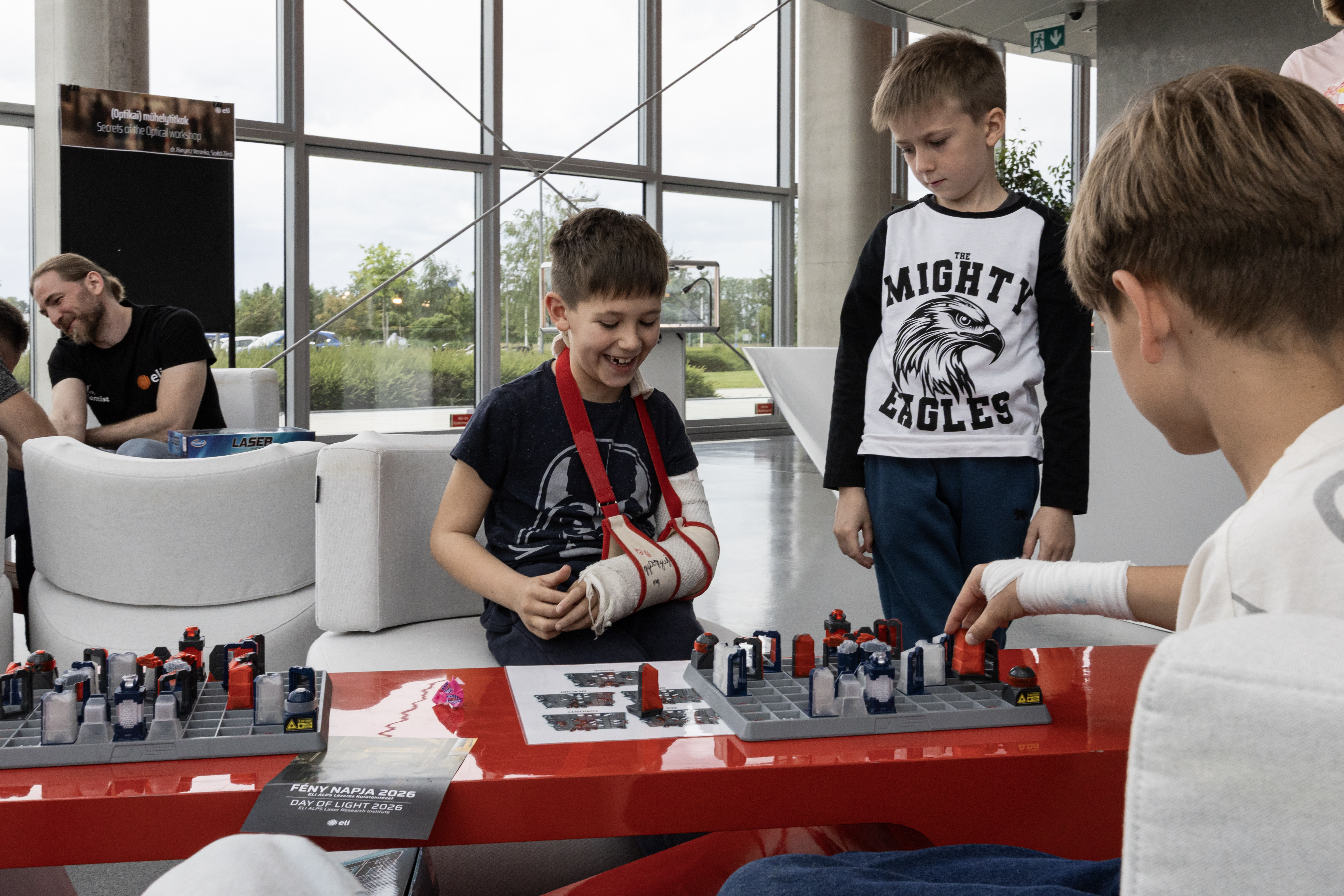
“It was awesome when we crushed lettuce leaves ‘frozen’ with liquid nitrogen, and when the rocket took off,” said excitedly Botond Koppány Horváth, an eight-year-old from Csongrád, who thoroughly enjoyed the guided tour and was happy to try out the devices at our visitor centre. The boy, who had a cast on his left arm due to a fall while playing football, said that this evening was really cool and that he would love to come back.
We met him at the extremely popular laser chess stand supervised by our colleague, physicist Attila Tóth. “Laser chess is a game that appeals to physicists and lay people alike. Kids really like the light darting back and forth. They try to understand how the light from the ‘laser cannon’ in the corner of the board is reflected from one mirror to another, which helps develop their spatial awareness,” said Attila, who noticed that players are initially hesitant to touch the pieces. You have to think ahead; you need a strategy to win. Attila is learning from every new situation. He believes that laser chess can be an excellent tool for getting people to love physics.
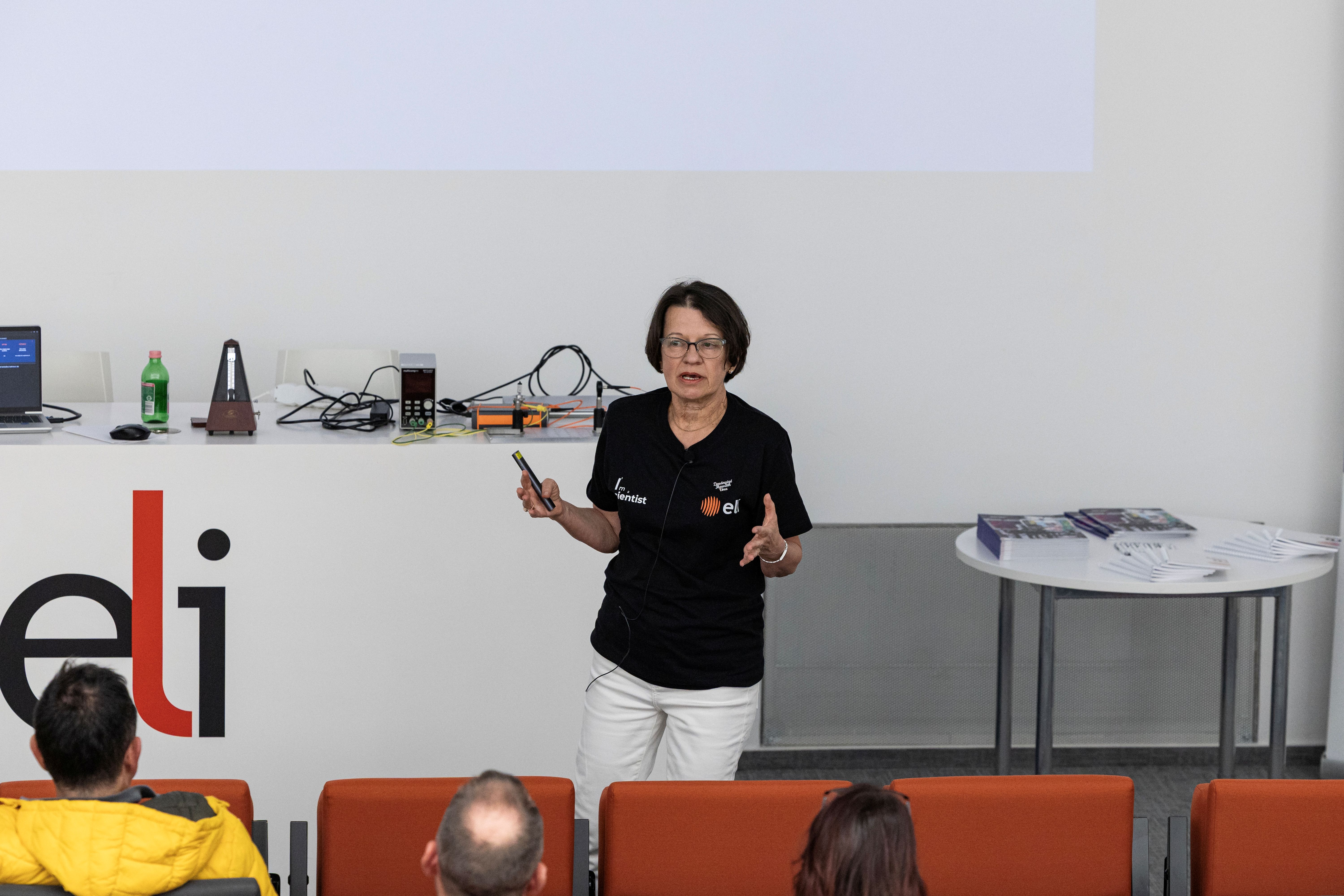
The head of our Science Outreach Centre, Vera Horváth, chose a captivating title for her talk: “A few sextillion attoseconds on ELI ALPS Laser Research Institute.” In her presentation, she explained the institute’s origins to the audience.
In his lecture titled “The energy of the void: quantum vacuum, light and the Universe,” our research fellow Szabolcs Hack clarified the concept of vacuum. In everyday life, by vacuum we generally mean a volume devoid of air. In a laser research institute, this is a very practical concept: vacuum is essential for studying the interaction between light and matter under clean, controlled conditions. Quantum physics, however, paints a much more peculiar picture of “empty space.”
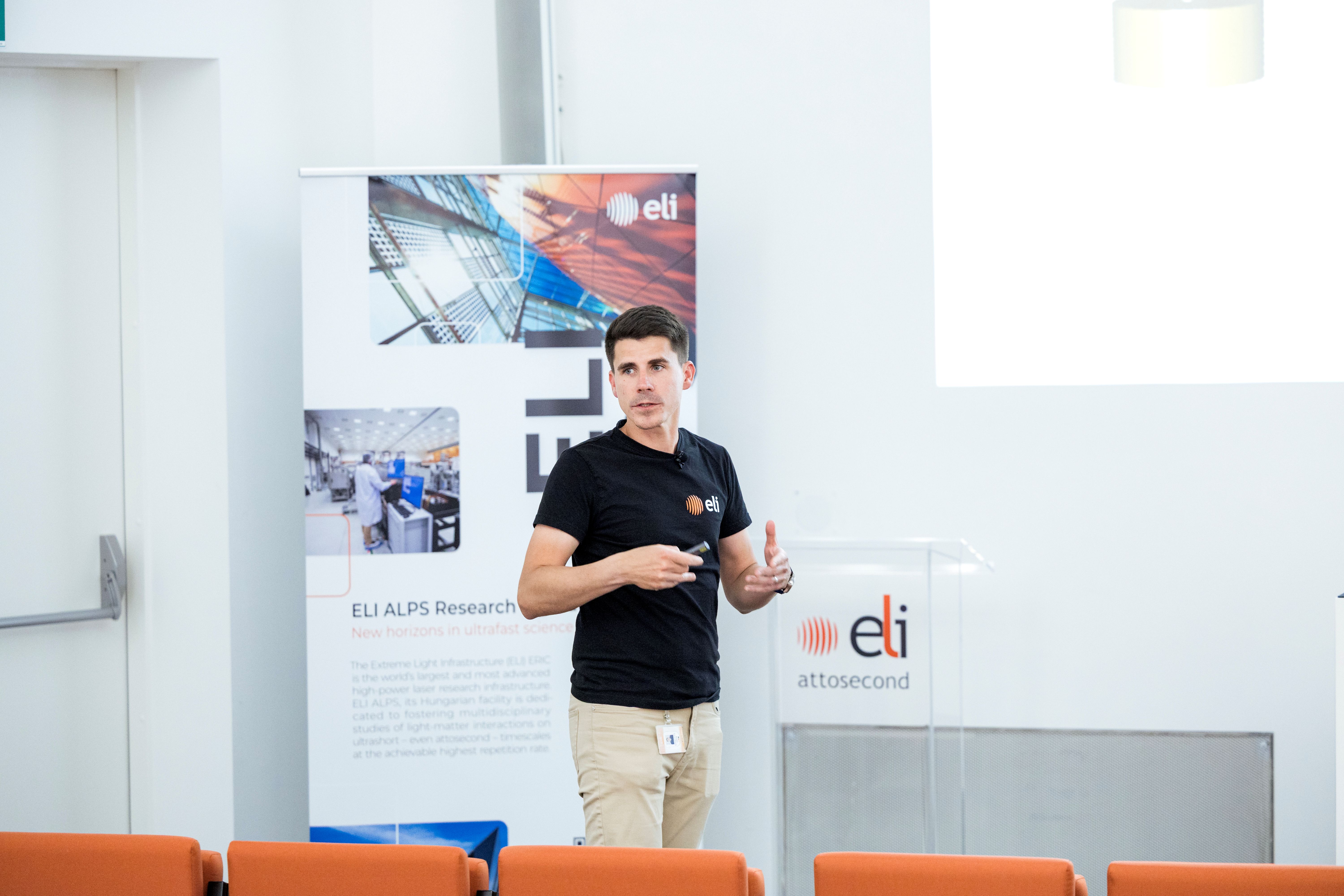
The lecture explained in simple terms why physicists say that a vacuum is not empty, but rather the lowest-energy state of quantum fields. Particular emphasis was placed on light – that is, the quantum mechanical description of the electromagnetic field, its zero-point energy, and the role of vacuum fluctuations – as well as on how we know that these are not merely theoretical concepts. The examples of the Lamb shift, the Casimir effect, and spontaneous emission demonstrate that the quantum vacuum has a measurable effect on matter.
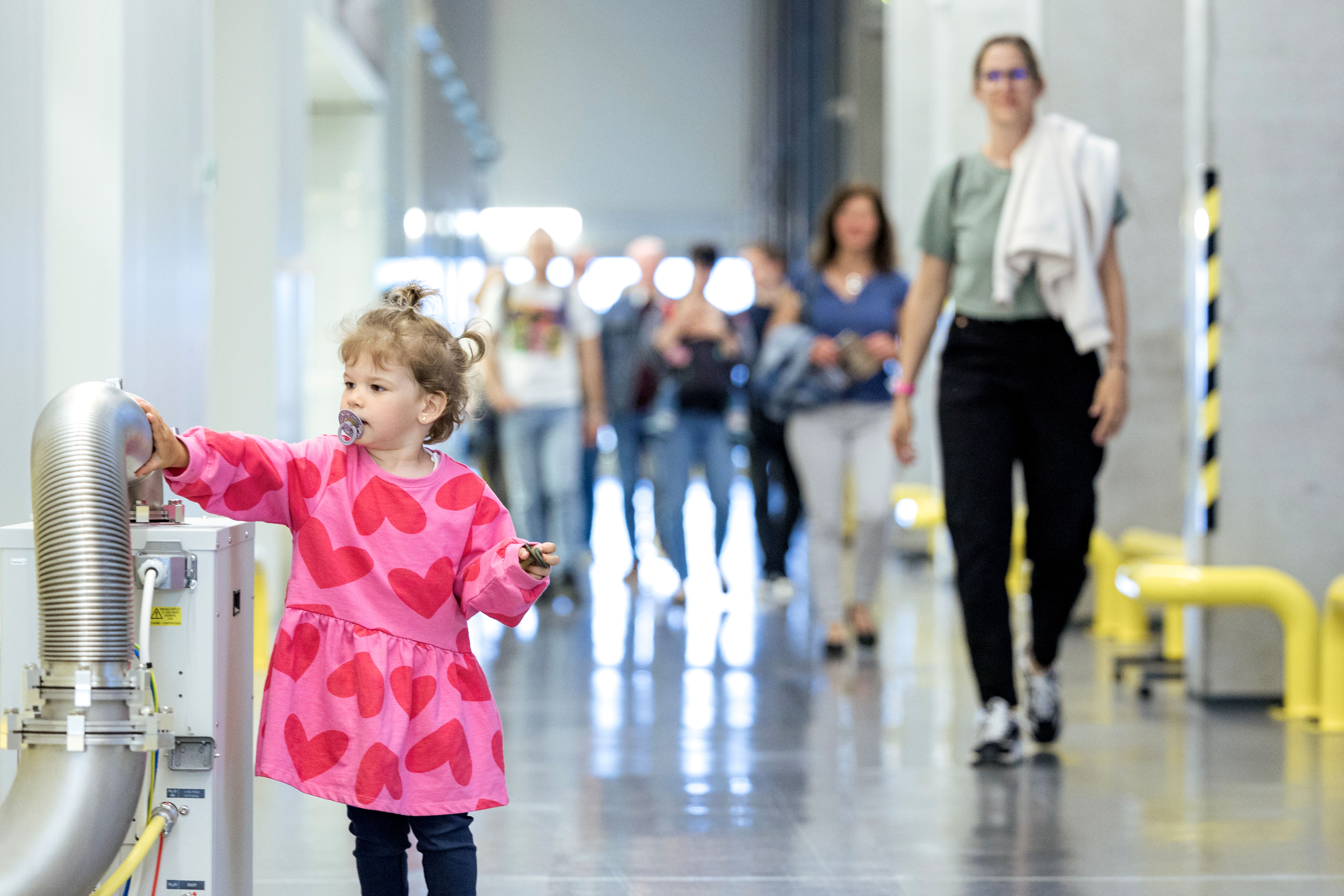
Although the Day of Light is now behind us, our guests will not go without experiences for a long time: in the second half of September, during Researchers’ Night, we will once again welcome our visitors with special programmes and spectacular experiments.