


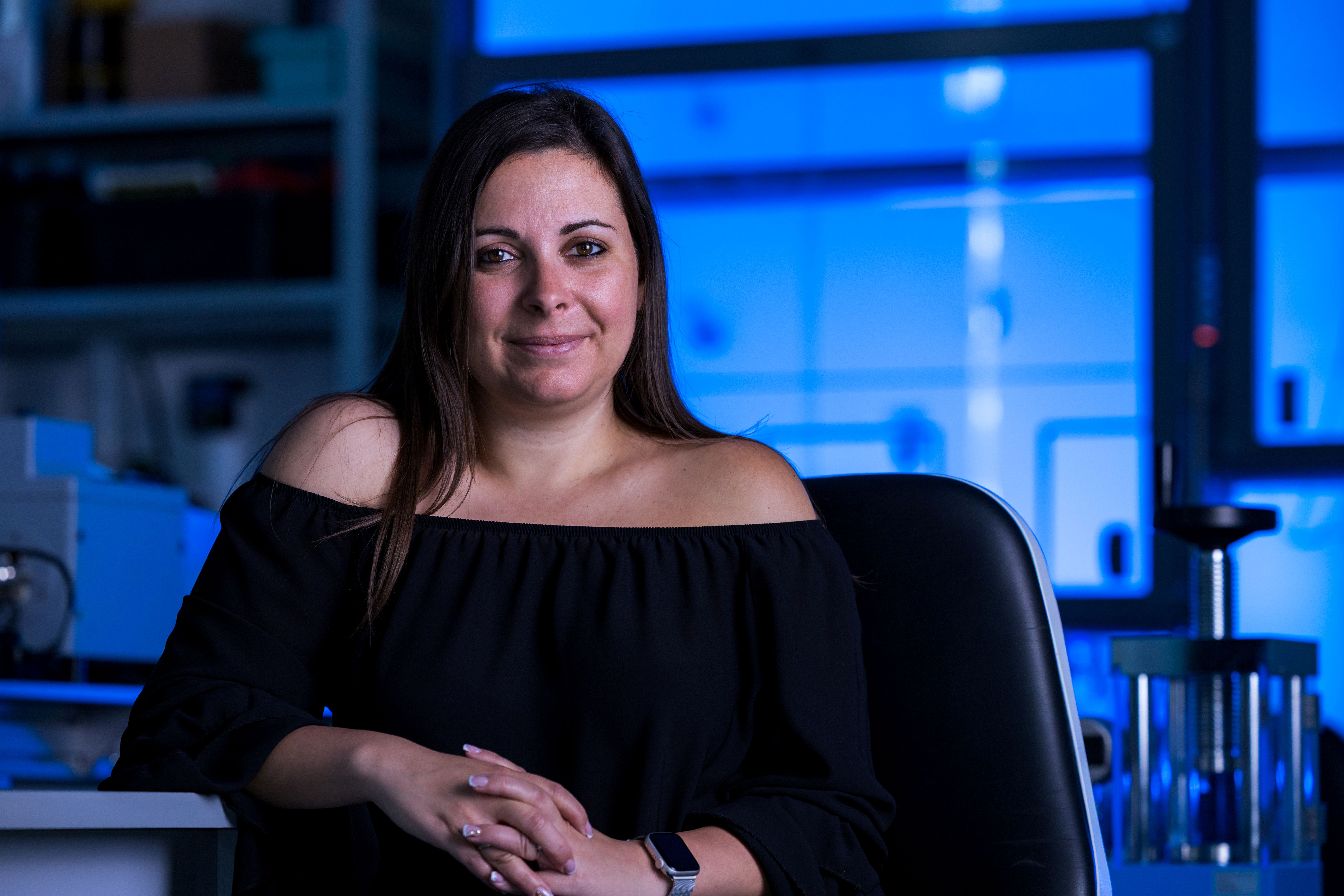
When and under whose influence did you decide to become a physicist?
I was born in Szeged, and this is where I attended primary school. Due to my family ties, the German language appeared in my life at a very early age: I learned it at school because of my Swabian grandparents who lived in Baja. My parents could no longer use the language, but my grandfather often spoke to me in German, which I loved as a child.
From the terrace of my grandparents’ house in Baja, we could see the Cultural Centre of Ethnic Germans in Hungary. It was a beautiful building, and to my child’s eyes, it looked a bit like Hogwarts from Harry Potter, and I often fantasized about how wonderful it would be to study there one day.
After finishing primary school, I applied to and enrolled into this secondary school. In the first two years, our physics teacher was unable to make us fall in love with his subject. On the contrary... Fortunately, in year 11, our class was assigned a new teacher, János Steingart, who impressed us with his knowledge and dedication. It is in part due to him that I chose to study physics. Erzsébet Kemmer, my form tutor, was another wonderful teacher of mine. I am still very grateful to her for advising me to become a teacher. But what kind of teacher? By that time, physics and mathematics had clearly become my favourite subjects, so I decided to become a physics teacher. In the days leading up to the university entrance exam, I came home to Szeged and attended a lecture by our current managing director, Professor Gábor Szabó, where he talked about the upcoming construction of the laser research centre. He emphasized how lucky Szeged-based researchers in the field were to have this superb institute moving into their hometown. Another remark of his – that there are no unemployed physicists – gave peace of mind to my mum too. As strange as the idea of her daughter becoming a physicist was (it was a completely unfamiliar profession amongst people we knew), if she would always have a job, then it could not be that bad. By then, the decision on becoming a physicist rather than a teacher had matured, and I applied to the Physics BSc programme at the University of Szeged.
Did you find it easy to tackle the challenges?
Ninety-three of us started the programme (back then, that’s how many people applied to study physics!), but after the mechanics exams at the end of the first semester, the student headcount dropped to thirty. Then wave theory also took its toll, so only sixteen of us completed the second semester. We all became friends for life and finished the MSc programme together. Some of us had come from secondary schools with mathematics specialism, had participated in related competitions, and could tackle the challenges much more easily than I did. Due to the profile of my school, there were many gaps in my knowledge. Therefore, I always had to study more than these students. Every semester was hard work, but it was worth it.
How did laser physics come into the picture?
One thing I knew for sure: I would never become a theoretical physicist. I admired my theoretical physics teachers and those who were fascinated by this field (so much so that I chose my husband from this group of men J), but I was not attracted to this discipline. On the other hand, I felt particularly at home during my laboratory classes at university. I was very impressed by the high-intensity femtosecond laser research laboratory of the Terawatt Titan-Sapphire Laser Research Group at the Institute of Physics, as well as the hELIos laser laboratory. During the classes held there, I felt that this was the direction I wanted to take. To get closer to my dreams, I applied for a summer job at the Institute of Physics. One day, one of my teachers called me to say that a professor from the United States was about to spend a semester in Szeged, and he was looking for a student assistant. He asked if I would take the opportunity. I was terrified at the thought of having to discuss technical issues in English all the time, but it soon turned out that the professor was Dr. Viktor Chikán, who has close ties to Szeged, and although I would have to talk shop, I could do so in Hungarian. I considered the opportunity a huge privilege and could hardly believe that I would be able to work with him. It was only logical that I would complete my MSc thesis under his supervision. Viktor was immediately likable, he came up with exciting ideas, and planned unique experiments. I really enjoyed working with him.
You graduated from university in 2016 and immediately joined ELI – even though the building was not finished yet...
And for another four years, our group didn’t get much beamtime, but that’s exactly what made this period so exciting. After my MSc final exam, I responded to a job advertisement at ELI. My final exam was on Tuesday, my job interview was held on Wednesday, and on Thursday I took the entrance exam for the university’s state-funded PhD programme as a backup in case I didn’t get the job at ELI. Fortunately, the job interview went well, and I was also accepted into the PhD programme. Of course, the choice was obvious to me: I opted for ELI. We engaged in planning, modelling and programme writing with Viktor and subsequently with Dr. Károly Mogyorósi, who became an immediate colleague of mine sometime later. As soon as we got the chance to do measurements on one of the laser systems even for a few hours, we were right there. Meanwhile, I tried to fulfil all the requirements necessary to obtain my PhD degree.
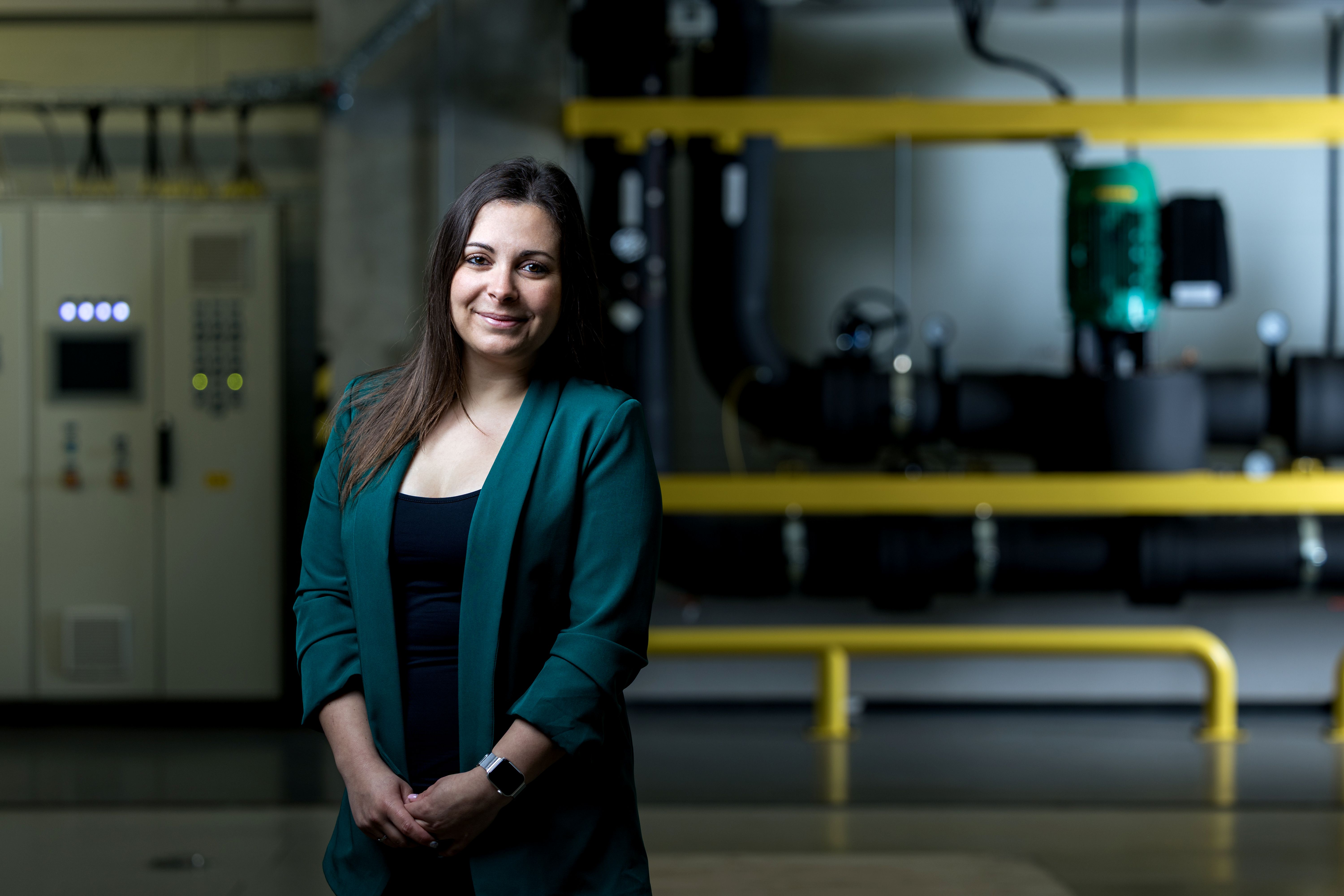
Why is the world of lasers so interesting and exciting?
The world of lasers is exciting to me because it provides insight into nature’s fastest and most fundamental processes. With lasers, we can observe motions that are completely invisible to the naked eye: the kinetics of charge carriers, the transformation of energies, as well as light–matter interactions occurring at incredibly short timescales. We often spend hours staring at a graph which doesn’t mean much to a lay person, but we see not only simple curves, but also the fascinating physics behind them. I can see how an electron in a semiconductor becomes excited and then returns to its ground state. I can see how all this changes when we deliberately contaminate or heat the material or expose it to other external impacts. And we manage to do this by finding the tiny differences in the different graphs.
What helps you increase your knowledge: when an experiment produces the expected result, or when it fails to do so for some reason?
Actually, both. The expected result verifies us and the path we are on. We can feel that the laws of physics do work. The unexpected, however, is particularly exciting: this is when we start our investigations. Was there a measurement error? Or did we encounter a physical effect that we hadn’t thought of before? These anomalies often open up new questions for us.
What is your role in the Ultrafast Chemical Dynamics Group?
Together with my group leader, Dr. Gergely Samu, and my colleague, Bálint Tóth, we coordinate the user campaigns that have been granted funding. This process begins with the preparation of the experiments through coordination meetings, preliminary measurements, and the preparation of the transient absorption spectroscopy (TAS) instrument for the experiments. During measurement campaigns, we work with the users and do everything we can to ensure that the measurements are as successful as possible. In many cases, this involves preparing or processing samples in the chemical laboratory. We evaluate the data together with the users and try to convert the results into scientific publications. Concurrently, we do the preparations for the next campaign, so the work is extremely varied: the tasks, the challenges, and the scientific issues we focus on keep changing all the time. It’s an exciting cycle!
One of the research institute’s missions is to disseminate scientific knowledge. You always participate in the organization of our open days. You always come up with ideas on how to make the presentations more colourful and engaging. Why do you find this important?
I consider myself a creative person, and I perceive this in many areas of my life. That is why I feel that the physicist career path is particularly close to my heart: it is a much more creative profession than many outsiders think. This trait is indispensable in all phases of our work, whether it’s planning a measurement, designing a sample holder, or presenting experimental results.
The same creative thinking manifests itself in the organization of outreach events aimed at the popularization of science. I particularly enjoy brainstorming well ahead of the events with my dearest colleagues, who are also very creative. To be honest, this stage is often just as enjoyable for me as the event itself, when the focus is on our other mission, i.e. science popularization. On event days, our goal is to bring as many people as possible closer to understanding how fascinating our field of science is and what it really means to be a physicist. So that when a young person decides to study physics, the parents’ first reaction should not be, “Okay, but where does a physicist work?”, as was the case for me. I wish the answer to this question became self-evident over time, and a career in physics appeared as a tangible, exciting, and conceivable path for many people.
One of our coolest events is Girls’ Afternoon, to which we invite secondary school girls interested in science. Women working in physics (and science in general) are still underrepresented, so I find it extremely important to create opportunities where girls can get to know this world through personal experiences. Years ago, I met a student from Szeged at one of these events, and she has attended almost all our open days ever since. She says that on every occasion she hears about at least one idea that makes it worth for her to come back. She has since become a university student in natural sciences. Another visitor said that meeting us gave her tremendous self-confidence. Recently, she has also become a student in the Physics BSc programme at the University of Szeged. For me, this feedback is a success in itself, and it confirms that these events do make a difference.
Postdocs are expected to try their hand abroad too and then return home armed with new knowledge. Where do you see your future?
I too believe that professional development is extremely important. In the past, this often meant leaving the country physically. Today, however, we live in a completely different world. The latest achievements are immediately available through publications, and in a place like this institute, international collaborators literally come to your door.
It is a sensational experience that one week we might be working with the samples of an Indian colleague, and the next week we might be preparing for the next campaign with a French colleague, while concurrently working on a new publication with American and Chinese users. I am based in Szeged, yet we are in daily contact with the whole world. What’s more, these collaborations are professionally useful, and also very enjoyable on a personal level.
It is often said that a change of environment from time to time is good for your mental health. I have been working here for almost ten years, but I don’t feel like I need a change. Every morning, I am happy to come to this world-class institute, I know exactly what my job is, and I feel what I do is important. To be honest, I cannot imagine a better workplace at the moment, especially since it is right here, in my hometown.
Photos: Gábor Balázs