


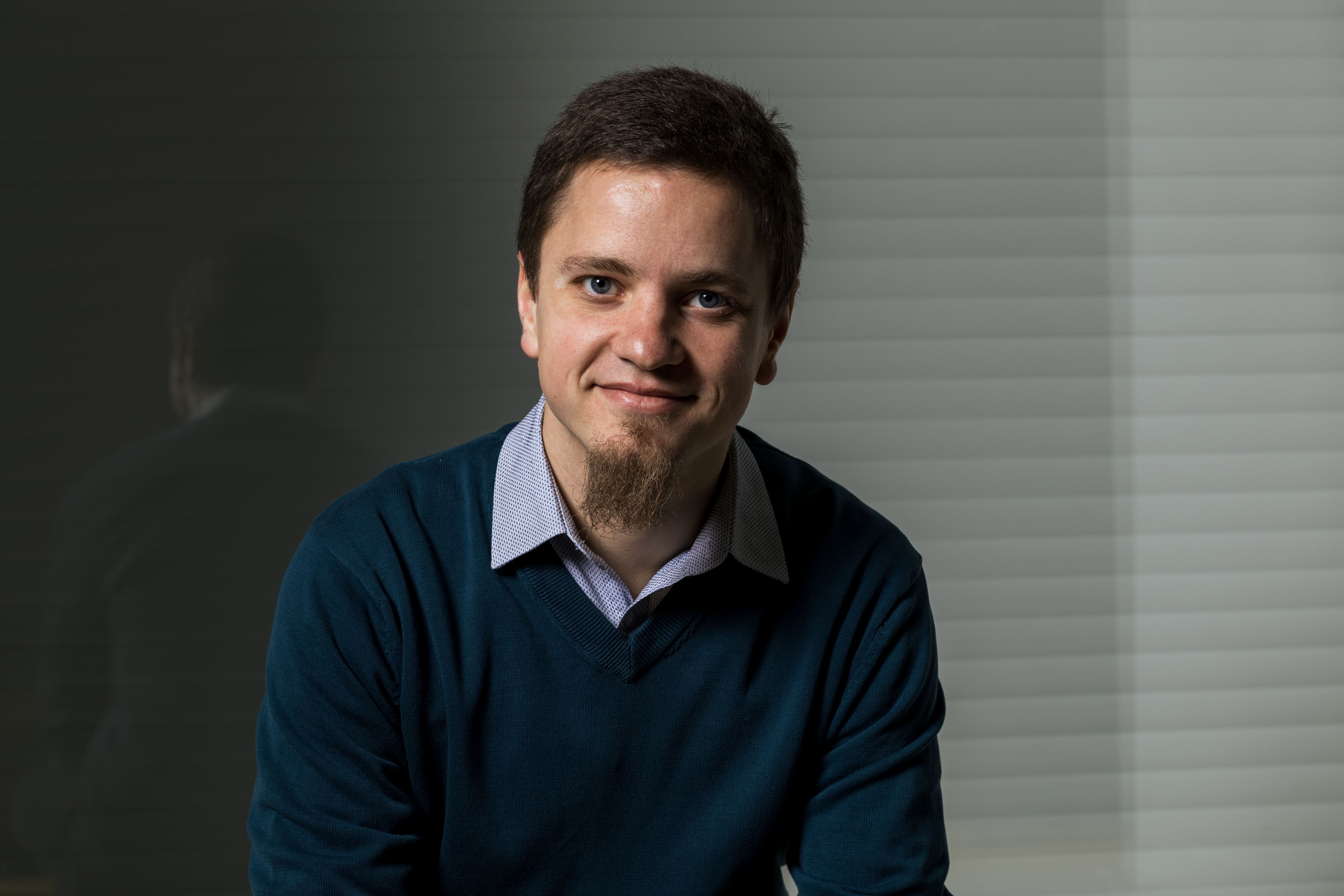
You matriculated from Dugonics András Piarist Grammar School in Szeged in 2013. Why did you choose this secondary school?
For me, it was an obvious choice: I grew up in a religious family, and my two elder brothers also attended this school. They told me many exciting and funny school stories that really captured the “Piarist” spirit. I would especially highlight the community life, which went far beyond the usual school experiences: we went on summer trips and participated in rowing, cycling, and hiking excursions.
When did you first become interested in natural sciences?
My father, who repaired household appliances, sparked my interest in electronics. While at primary school, I attended a physics club, built electromagnets at home, played with transformers, and conducted various electronic experiments. I read popular science books on physics – specifically on light. Both in primary and secondary school, I had teachers who reinforced this interest in me.
I consider it a key factor that our physics teachers spiced up the curriculum with experiments. As far as I know, this was by no means common practice at the time: in many schools, an “experiment” meant the teacher simply told the students that if we did this, that would happen. We, however, actually saw these things happen.
By the end of secondary school, my resolve had strengthened: I wanted to pursue mathematics and physics in the future. I just had to decide in which field. I was interested in a teaching career, but I was more drawn to research, though in reality I knew nothing about what the latter actually meant in practice.
You attended the University of Szeged for your bachelor’s and master’s degrees in physics. You completed your thesis in 2016 at the Ellipsometry Research Group of the Department of Optics and Quantum Electronics, under the supervision of Judit Budai. What memories do you have of those years?
The time I spent on ellipsometry was a defining period, as that was when I gained my first serious experimental experience, and it was from this research that my results were first published in an international scientific journal.
Meanwhile, I took more and more courses in theoretical physics, which I really enjoyed, so I turned my research efforts in that direction. As a master’s student, I asked Péter Földi, a researcher at the Department of Theoretical Physics at the University of Szeged, to be my thesis advisor. I defended my thesis, which focused on the numerical modelling of the trajectories and spins of laser-accelerated particles, in 2018.
During my university years, I finally experienced what research entails, and my advisors assured me that I was suited for this task. I also had the opportunity to try my hand at teaching: I taught introductory mathematics and physics courses to undergraduate physics students.
You began your PhD studies two years after earning your master’s degree. What happened during those two years?
During my final semester at university, I applied to the Premonstratensian Abbey in Gödöllő as a candidate for monastic life. After being accepted, I spent one year as a candidate and one year as a novice. In the end, I did not take my vows because I felt that I did not belong to that world. I decided to return to physics. Péter Földi welcomed me with open arms, and I became his PhD student. My research focused on the quantum optical aspects of high-harmonic generation.
A year later, you accepted a position as a physicist in the Quantum Optics Group at the ELKH Wigner Research Centre for Physics in Budapest (the institute has been known as the HUN-REN Wigner Research Centre for Physics since 2023), and so, having changed your research focus, you continued your doctoral research there under the supervision of Professor Péter Domokos. What was behind this unexpected decision?
I had known András Vukics for some time and was aware that he worked with laser-cooled atoms and quantum optics at the Wigner Institute. These topics were incredibly exciting to me, and in Szeged I had only encountered them from a theoretical perspective. I was very curious to see what such an experimental setup might look like. András willingly showed me around the lab, and I also talked with the group members about technical issues. The next day, András contacted me – he offered me a job. I hadn’t expected this at all. Suddenly, I didn’t know what to do with the situation. I had planned to complete my doctoral dissertation in Szeged, but at the same time, this was a huge opportunity and an honour. For a long time, I was in two minds over what to do. My girlfriend, with whom my relationship had just turned serious at the time, played a significant role in my decision. She lived in the capital, and I lived in Szeged. In the end, I accepted the job. Ági has since become my wife, and we now have a little girl and a little boy.
At Wigner, I joined the experimental project on the atom-photon interface. Looking back, I realize just how risky an undertaking this was, since the laboratory was still in its early stages and required a great deal of work to make it suitable for serious doctoral research. Nevertheless – thanks to Péter Domokos’s excellent professional leadership – in nearly three and a half years of research, we achieved impressive results, which we were able to publish in Q1 journals. In addition, I was able to participate in numerous international conferences with poster presentations and lectures.
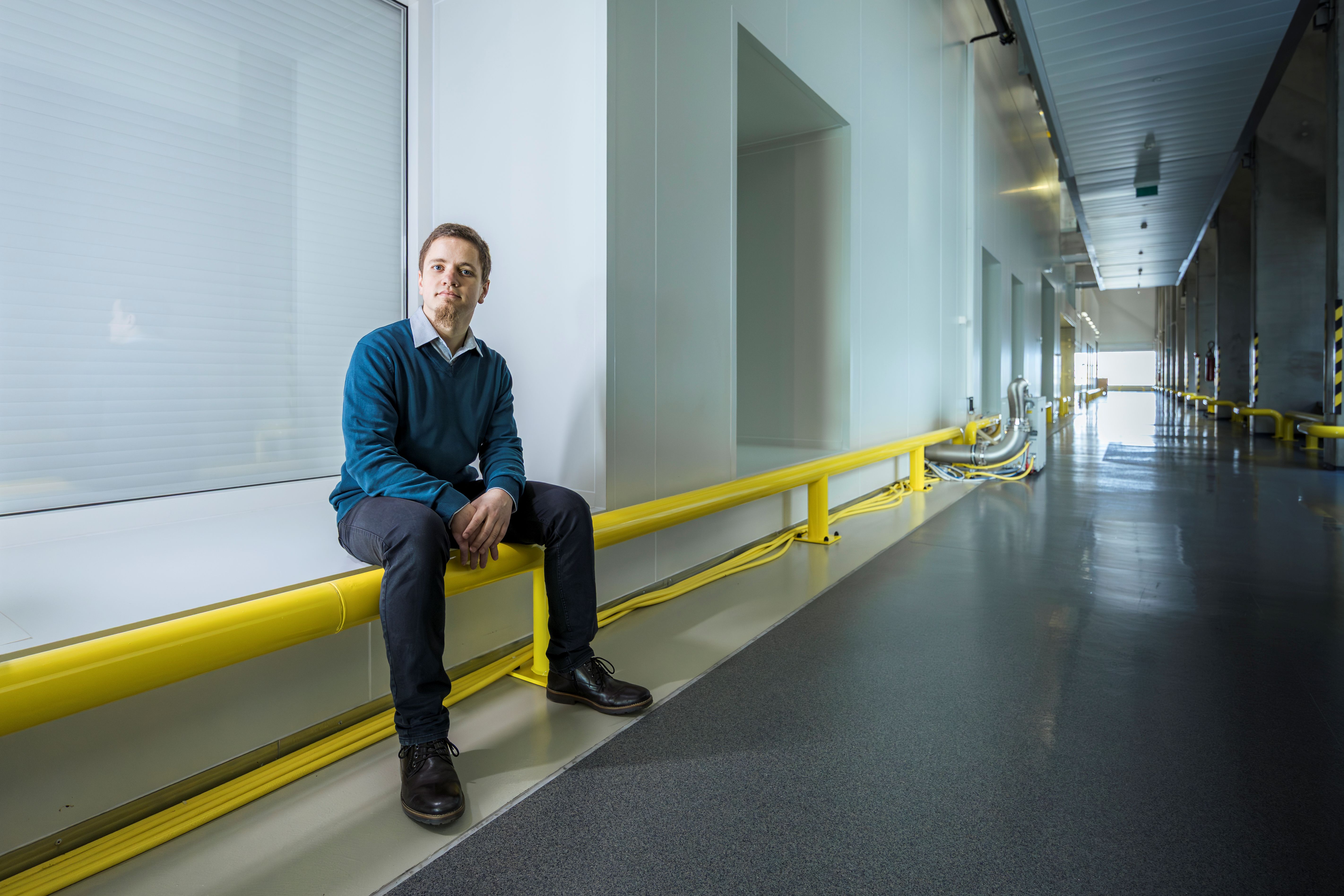
Leaving your professionally successful years in Budapest behind, you returned to Szeged. What was behind this decision?
I didn’t like living in Budapest. I grew up in Szeged and completed my schooling here. It’s a liveable city where housing is much easier to find than in the capital.
Péter Dombi, the former head of division at the ELI ALPS Facility, also worked at Wigner, and his office was right next to ours. When I was already considering moving to Szeged, I dropped by one day and asked if there happened to be a job opening at ELI. He recommended the NanoESCA Group, so I applied and was hired. I started working there last January.
In September, I transferred to the SYLOS Gas Attosources Group led by Zsolt Divéki. From a professional standpoint, the change was a fortunate one: on the NanoESCA endstation, I worked on processes occurring on the surfaces of solids, whereas on the SYLOS beamline we conduct experiments with free atoms and molecules, which is much closer to my doctoral research.
What tasks await you at ELI?
Although my research field remains light–matter interaction, the systems used here and at the Wigner Institute are fundamentally different. There, I worked with continuous-wave, narrow-linewidth, low-energy lasers; here, we have short-pulse, broad-spectrum, high-energy lasers. I still have a lot to learn to fully understand the processes. At the same time, I can already see the connections where I can apply the knowledge and experience I gained at the Wigner Institute: the knowledge I acquired in atomic physics and quantum optics, along with the practical experience in optical development, is already paying off.
To what extent was your decision to return to Szeged influenced by the fact that you can use the world’s most advanced equipment at this institute?
It was certainly important that, as a physicist, I could continue to deal with challenges at the forefront of scientific research. The user facility, as an institutional framework, is a novel environment for me. This also has a unique advantage: the best experts from all over the world come here to use our systems. Here, on-site, we can learn from them, and we can help not only with the infrastructure but also with our own professional expertise so that together we can create something new.
Photos: Gábor Balázs