


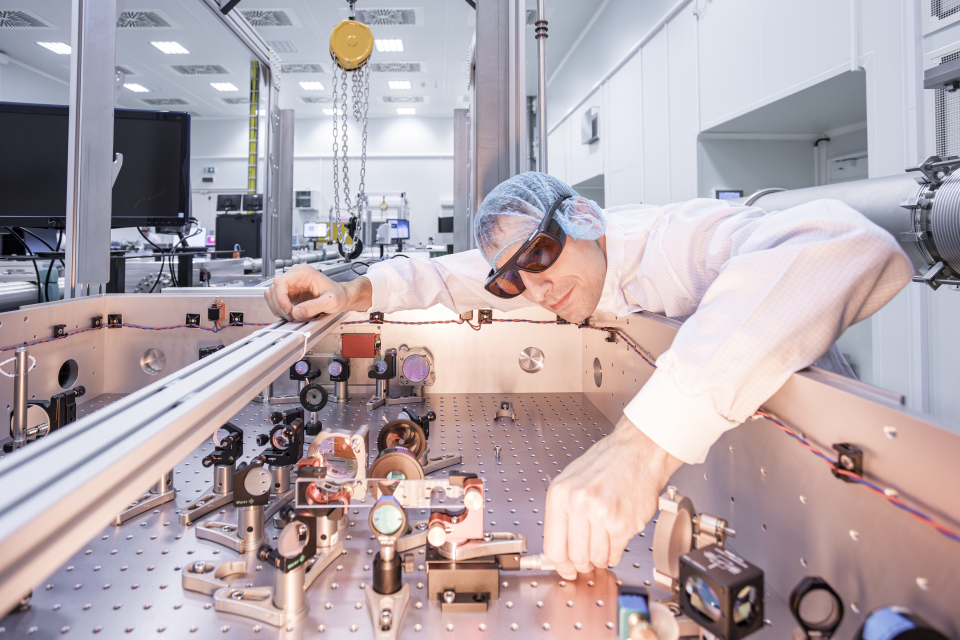
“What we are seeing is a more established user community engaging with an evolving experimental offer,” says Allen Weeks, Director General of ELI. “New capabilities are opening the door to different types of research.”
The scientific scope of submissions reflects a diverse portfolio of research areas. Materials and surface science, particle acceleration and applications, and life sciences remain among the most prominent fields, alongside contributions in relativistic interactions, plasma physics, and atomic, molecular, and optical (AMO) physics.
The research areas include a broad range of applications, including health and food sciences, energy-related research, and materials for digital technologies. Industrial and manufacturing applications, as well as emerging areas such as environmental and cultural heritage research, further illustrate the expanding use of ELI’s capabilities into new domains.
Participation in the 8th Call continues to reflect ELI’s international reach. Germany (14) leads in proposal submissions, followed by Italy (10) and the Czech Republic (8). Proposals were also submitted by teams from the United Kingdom, the United States, and a wide range of European and international partners. This geographic distribution highlights the strong European core of ELI’s user community, complemented by continued engagement from global research institutions.
All submitted proposals will undergo a feasibility study, followed by ELI’s excellence-based peer review process, ensuring that access is awarded based on scientific merit and feasibility. Successful proposals are expected to be implemented in upcoming experimental cycles across the facilities.