


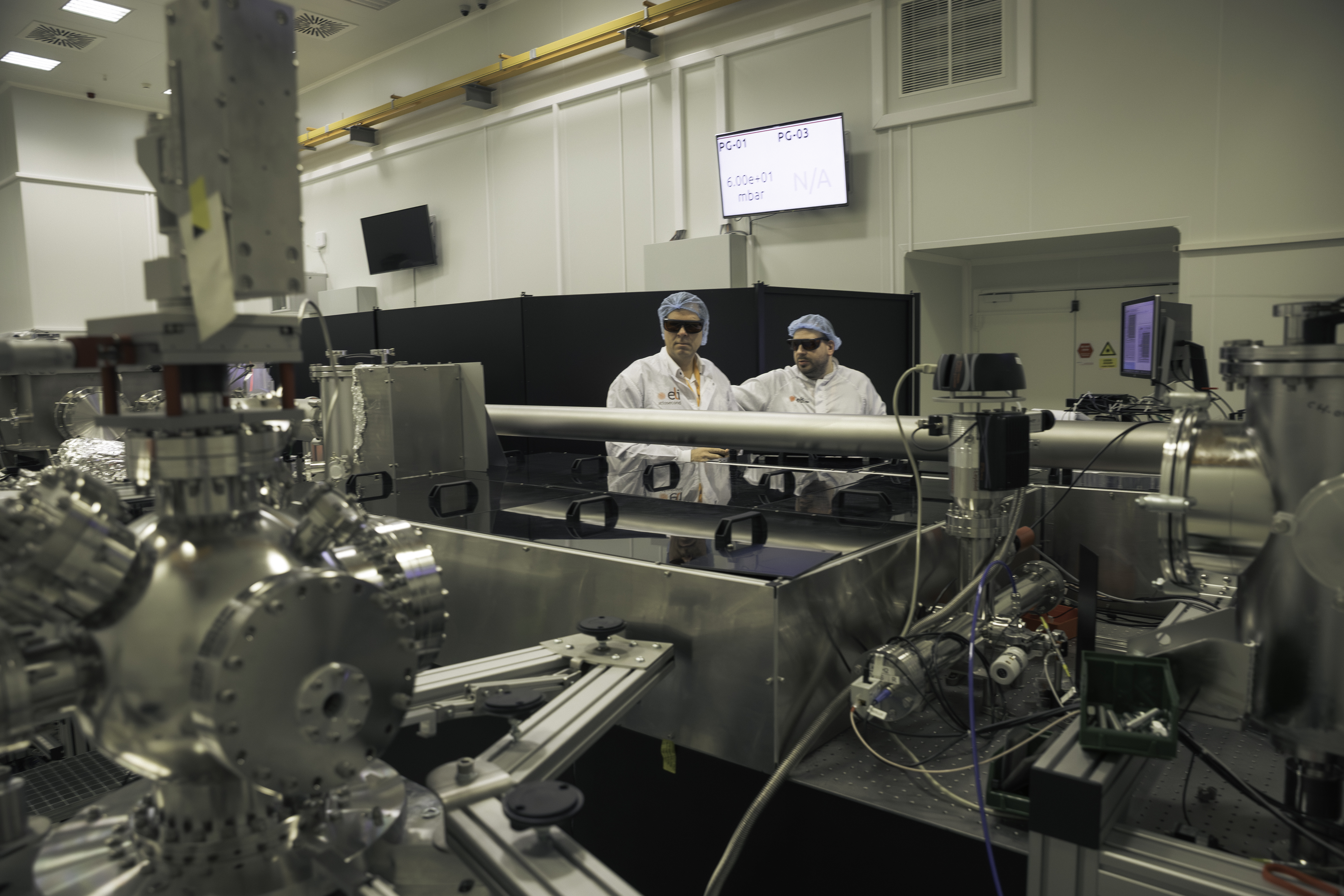
One of our ultrafast laser sources is the HR1 laser system. This device is perfect for conducting experiments at 100 kHz and 100 W average power with pulses shorter than 7 fs. A key feature of our HR1 is that it scans experimental samples with 100,000 pulses per second. However, this high repetition rate generates substantial heat, and limits applications requiring lower repetition rates. To address this, the repetition rate must be reduced: instead of 100,000 pulses per second, only 10,000, 1,000, or 100 pulses should hit the sample. This will also proportionally reduce the heat load.
According to Zoltán Várallyay, senior research fellow in the High Repetition Rate (HR) Laser Group, reducing the repetition rate would require a fundamental redesign of the HR1 amplifier system. Operating the current amplifiers – optimized for 100 kHz – at a significantly lower rate would cause catastrophic damage to the gain fibers. Consequently, to achieve a lower repetition rate, a dedicated new laser system had to be developed.
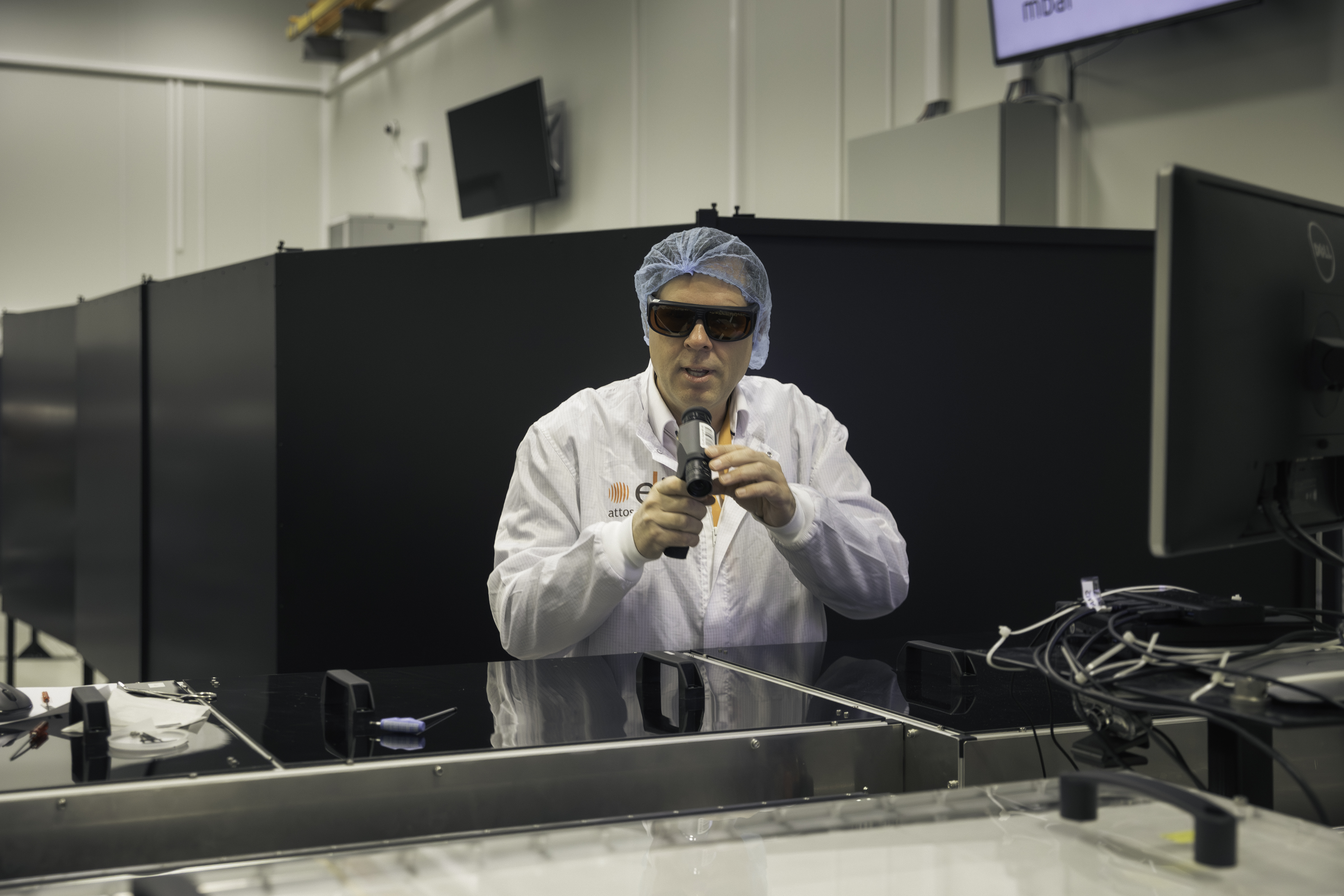
“To solve this problem, we developed the HR Alignment laser system for the ELI ALPS HHG beamline,” he explained in an article published in the journal High Power Laser Science and Engineering under the title “Repetition-rate-independent post-compression to achieve CEP stable few-cycle laser pulses”.
The initial phase of development involved identifying a sufficiently stable source (in terms of power and pulse properties). The huge advantage of the Pharos laser system manufactured by Light Conversion is that, thanks to its lower frequency, it does not heat the samples, and all the basic physical parameters related to the pulses are stable between 10 Hz and 10 kHz. Since the Pharos system produces 300 fs pulses – which are too long for attosecond pulse generation – we implemented a spectral broadening stage. In other words, a spectrum of around 100 nm was produced from a narrow spectrum of 10–20 nm. For this purpose, our physicists used two gas-filled, so-called multipass cells. Following these cells, dispersion-compensating mirrors were used to temporally compress the pulses. The published research article details the performance of this system, in which the characterization of CEP (carrier envelope) stability was also a major factor.
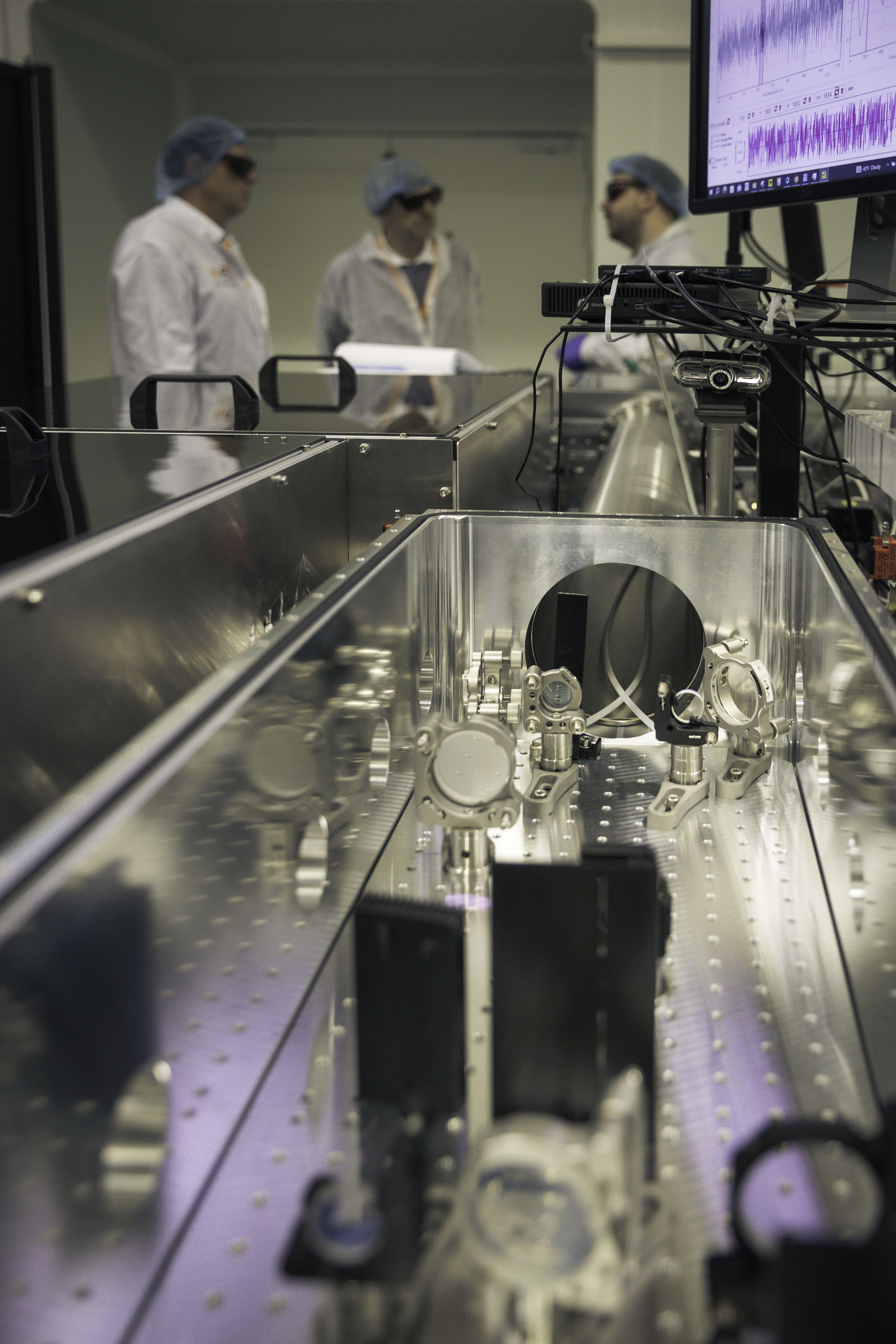
The new system provides pulses of around 6 fs and 1 mJ energy, with an adjustable repetition rate between 10 Hz and 10 kHz, and CEP stabilization. The system uses Yb:KGW preamplification, compression in gas-filled multipass cells, and chirped mirrors. Characterization shows excellent energy stability, beam quality, and temporal contrast. In other words, the HR Alignment laser system with variable repetition rate provides very stable pulses, allowing for highly accurate experimental measurement results. “We have been continuously using the system, which was put in operation six months ago, and which often enables 24-hour or longer measurements. Although its average power is one-tenth that of the HR1 laser, the energy of the pulses is the same, and its CEP stability is excellent,” our senior research fellow said, summarizing our experiences over the past period.
This compact, stable system enables high-flux attosecond generation and further expands the ultrafast research possibilities at ELI ALPS. HR Alignment is also included in ELI's eighth User Call, which will be published on 17 March 2026.
Photos: Gábor Balázs