


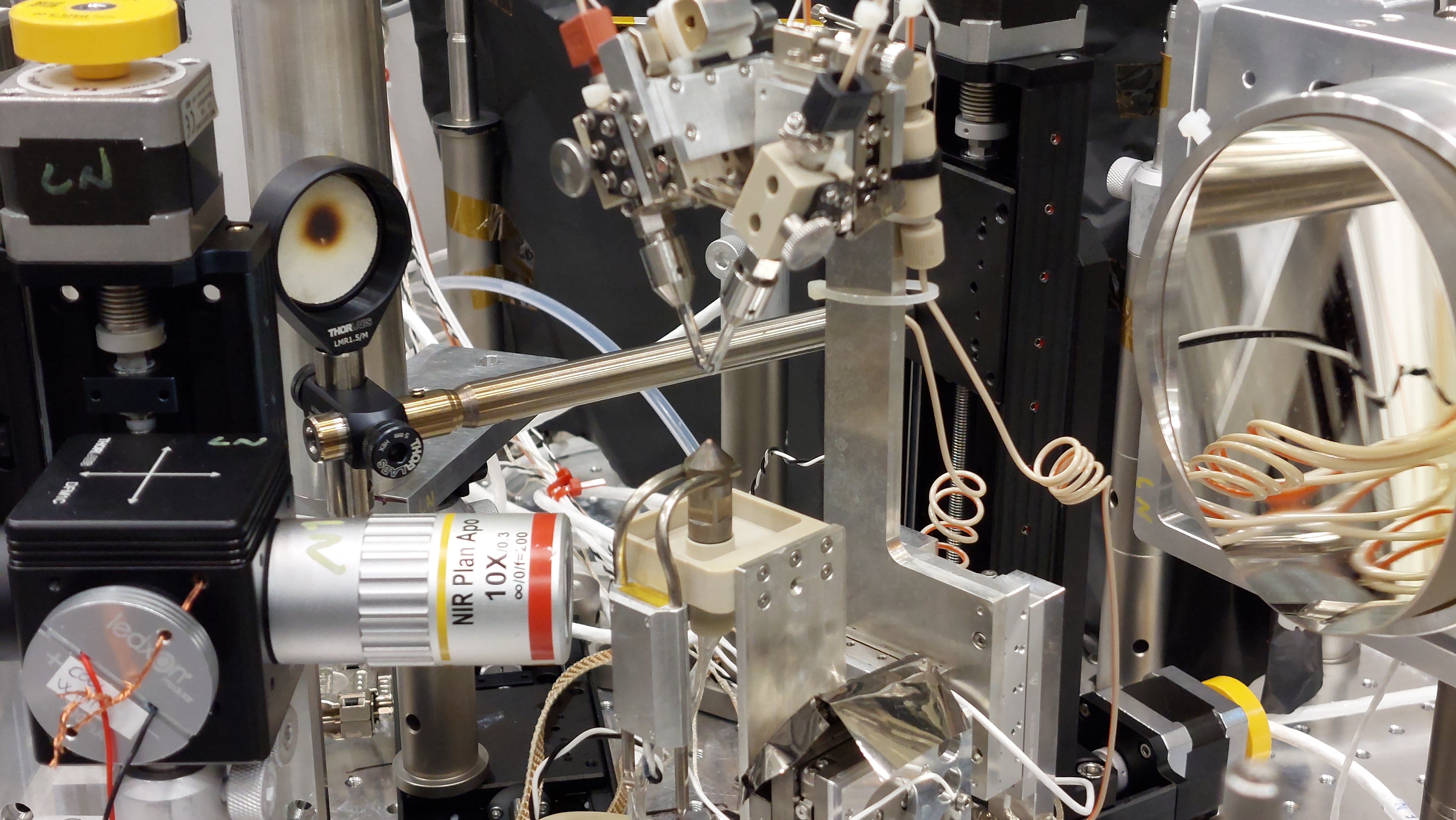
In high-intensity laser–matter interactions, including laser-induced particle acceleration, physicists generally want to work with the highest possible focused laser peak power, which is the ratio of energy per unit area to pulse duration. Therefore, for the same pulse energy and focus, the highest peak intensity can be achieved with the shortest pulse duration.
According to Károly Osvay, head of the National Laser-Initiated Transmutation Laboratory (SZTE NLTL) at the University of Szeged, and senior scientist of ELI ERIC since September 2025, it has long been known that by changing the so-called spectral phase in a laser pulse, it is possible to ensure that the components of the pulse reach the target in a specific temporal sequence. This ultimately allows the temporal shape of the pulse to be influenced.
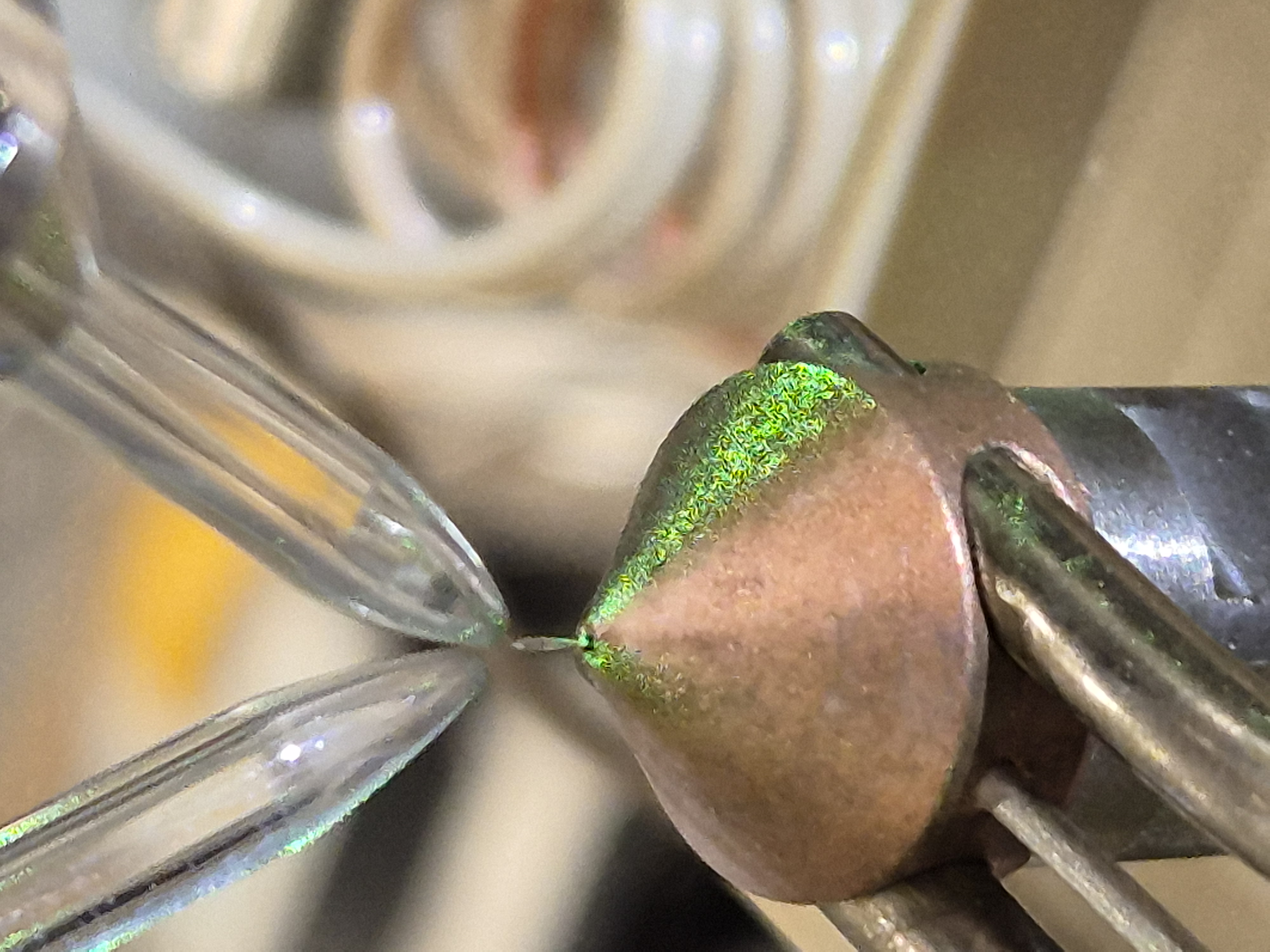
“We looked at what happens when we change the relative timing of the frequency components. We confirmed that the order of the components influences which particles we can accelerate best and to what extent. In the case of deuterated solid-state foils, for example, we can change the ratio of accelerated proton and deuteron ions, as well as the ratio of the forward and backward accelerated species. All this is fundamentally influenced by the complex temporal shape of the laser pulse,” said the researcher, describing the results published in Communications Physics. For this work, the team used the LEIA beamline, which was designed, built, and operated by SZTE NLTL and is based on the lasers of ELI ALPS. The simulations supporting the experiments were performed by Zsolt Lécz, a research fellow at ELI ALPS.
“In conjunction with experienced researchers from the SYLOS Group, we generated pulses of different shapes and then examined what happened to the target – in our case, a thin, transparent film and a similarly thin liquid sheet,” Károly Osvay said sharing the details of the project. The goal was to optimize certain properties of laser-accelerated ions. In addition to ions with the highest kinetic energy, they also investigated the total energy of all accelerated particles. Their study suggests that for any kind of target (material thickness) it is possible to sculpt the temporal shape of a laser pulse for an optimum highest kinetic energy or acceleration efficiency. The experiment conducted by the researchers in Szeged shows that achievement of the highest peak power requires not the shortest laser pulse, but one with a suitable temporal shape. The two require different optical and laser technologies.
Based on these experimental results and using EU R&D grant funds they have applied for in collaboration with Vilnius University, Lithuanian laser companies, and ELI ERIC, Károly Osvay’s team aims to develop a laser that is optimized for accelerating a given charged particle (electron, proton, deuteron, etc.) and a specific target (liquid, gas, sheet).
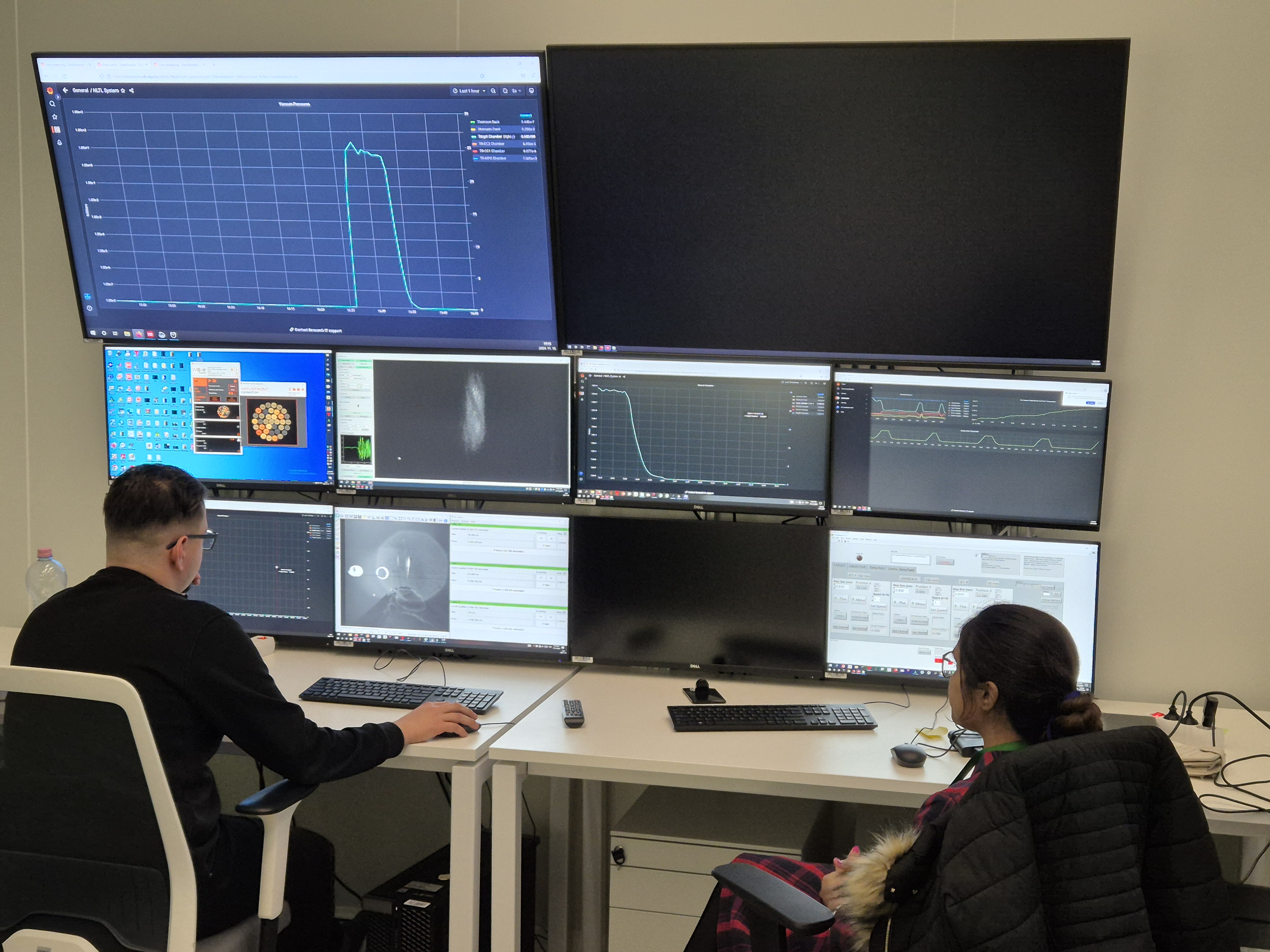
“We would develop a laser that accelerates charged particles with the highest possible efficiency; this would enable us to offer cost-effective laser solutions for the medical, microelectronics, and energy industries, even on an industrial scale,” he explained. Dr. Osvay believes that thanks to this research result, the energy of ions can be maximized on the LEIA beamline (as well as at similar beamlines at ELI Beamlines in Dolní Břežany, Czech Republic, and ELI Nuclear Physics in Măgurele, Romania). Users who need to work on the LEIA beamline can also benefit from this optimization through increased neutron yield.
The LEIA beamline, the operation of which will be supported by ELI in the future, has been part of the recommended portfolio for ELI users since its completion. In the latest call for users, we invited researchers from all over the world to apply by 29 October 2025 to use the equipment at the research institutes in Szeged, Dolní Břežany, and Măgurele. In response, we received 170 proposals from a total of 680 scientists collaborating as principal investigators and co-researchers in 30 countries. This number clearly demonstrates the expansion of research topics at the ELI Facilities.